Send the same drawing to two stampers. There might be two alternative responses regarding thickness. That’s not a chance. Capability is a shop thing, not a process thing. In this article we investigate the true nature of the thickness limit. We cover dies, press tonnage and material type. You will also discover how custom metal stamping stacks up against other forming processes as gauge changes.
What Is Custom Metal Stamping?
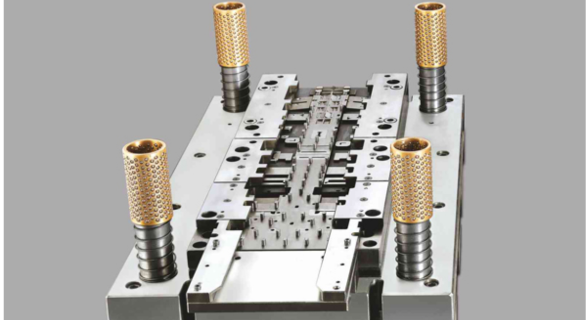
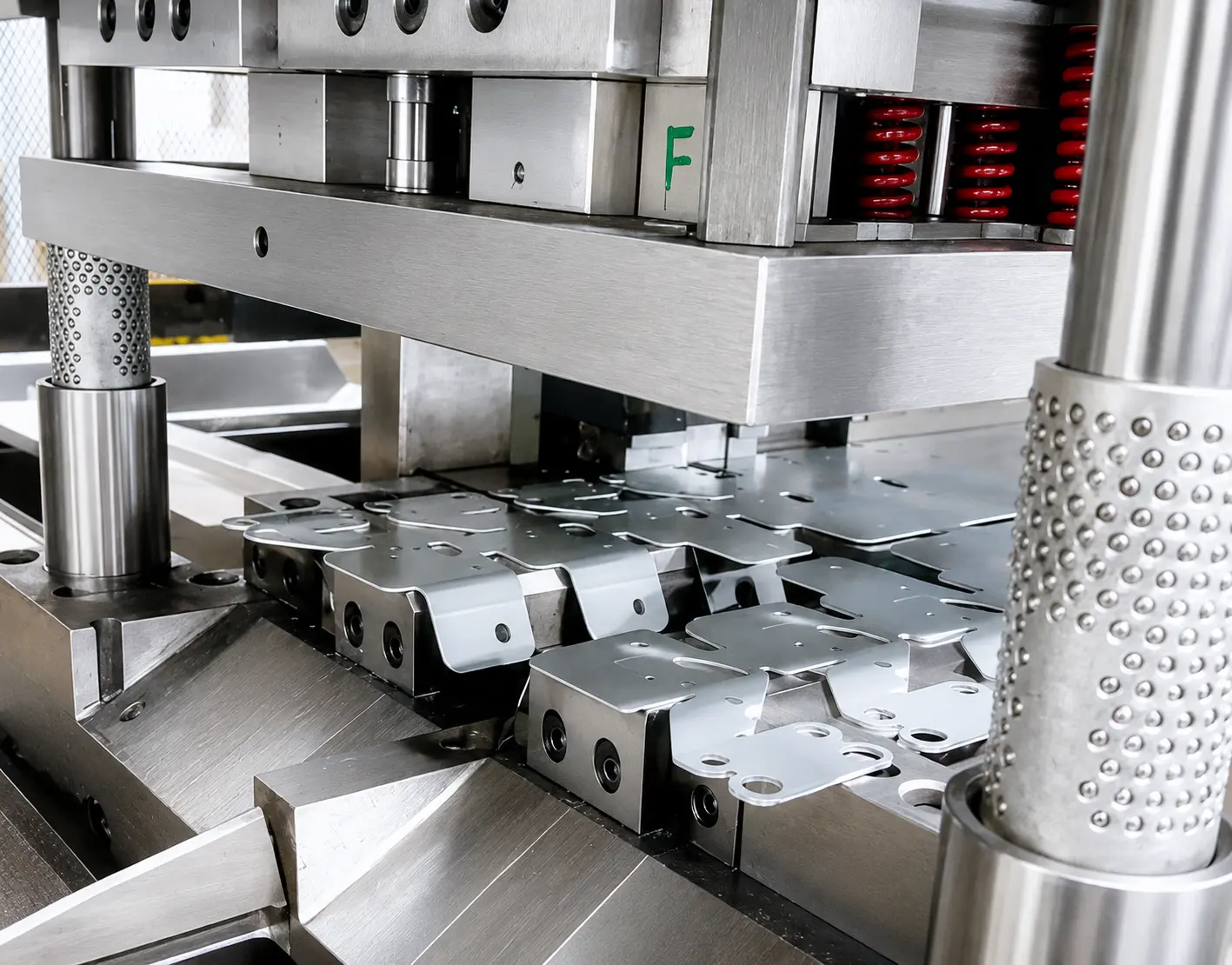
Custom metal stamping is the cutting or shaping of sheet metal. It uses a die and a punch. Both pieces are intended for one task. Together they push and cut or bend the metal into form.
It’s not like machining, where you chop away piece by bit. Stamping is the quick reshaping or separation of metal in one move. It can produce the same part again and over with very little waste. The outcome is a clean, reproducible part.
| Fact | Detail |
| Core tooling | A custom die and a matching punch |
| Main equipment | Punch presses, from light to heavy duty |
| Typical output | Uniform parts made in volume |
| Best for | High-volume runs with tight tolerances |
Does Thickness Limit What Custom Metal Stamping Can Make?
No, a fixed wall is not thickness. It moves with the die and press used for the task. A shop with just light presses will stop at thin metal. With hefty presses, a store may go considerably thicker.
The true constraints come down to three things: the force the press can provide, how tight the die clearance is set, and how effectively the tooling is manufactured. If you get all three, you might have a variety of gauges.
Why Press Tonnage Sets the Real Limit
The force a machine can exert in one stroke is called press tonnage. Thin metal takes less force. Thick, hard metal needs more. A company with presses from roughly 10 tons up to 600 tons may match the appropriate force to each work. That range permits one shop to produce both tiny electronic parts and massive structural pieces and not outsource work to a second vendor.
How Does a Custom Metal Stamping Die Adjust for Different Gauges?
For a certain gauge and hardness, a unique metal stamping die is made. It’s not a one size fits all tool. The clearance is the space between the punch and the die. This gap must be the thickness of the metal. Get it incorrectly, and the component may rip, burr, or wear out the tool rapidly.
- Single dies only do one step at a time. When the gauge or form varies often, they operate well.
- Progressive dies transport the metal strip through many stations at one time. This accelerates the run.
- Both kinds of dies may be utilized for in-house tools. That indicates clearance is for the specific work itself, not taken from a stock tool.
- CAD/CAM design lets a die be checked on screen before any steel is cut.
A custom metal stamping die may be moved to a new gauge more quickly at a firm that makes its own dies in-house. The clearance and punch form are still within their own control.
Punch vs Die: How Each Part Handles Thickness
A stamping setup consists of two matching pieces. The die is the female half. It forms or slices the sheet. The punch is the tool that moves into the die to cut or form the metal. It cranks in the die. The custom metal punch stamp for a custom die should match the die in hardness and clearance. The metal gauge must be reached by both.
This is what makes a Custom metal stamp die different from a standard tool. One standard gauge is used in a stock tool. An in-house tool may be re-cut for just the thickness a project requires. This is very important if the component is not one of the normal stock sizes.
Which Type of Custom Metal Stamping Fits Which Thickness Job?
At each gauge, not every approach is effective. The proper decision relies on the volume, shape and depth of the portion you require. Here’s how the 3 primary kinds compare.
| Method | Best For | Volume | Depth or Shape |
| Progressive die stamping | Uniform, repeat parts | High | Medium, several steps in one pass |
| Drawn stamping | Deep, complex shapes | Low | Very deep forms, low waste |
| Transfer stamping | Tight-tolerance parts | High | Complex shapes, many stages |
Progressive die stamping feeds a metal strip through a series of locations. Each station does one thing, like bending or punching. This leads to rapid parts and the same every time. Drawn stamping is when blanks are pushed into a die using a punch.
Instead of a flat shape, it works best for parts that need true depth. Transfer stamping involves moving parts from one station to another on equipment. It maintains precise tolerances even on large volumes.
Select progressive or transfer stamping for consistent, large-volume parts. Choose drawn stamping for intricate deep shapes.
The Core Steps Behind Every Custom Metal Stamping Die
A few basic steps make up most stamping work. Each one reacts a bit differently to metal thickness.
- Blanking – cuts a piece out of the sheet. The cut-out piece becomes the part.
- Punching – cuts a shape using a die and punch. The extra metal drops away.
- Bending – folds the metal along one line. Common shapes are L, U, or V.
- Drawing – pushes metal into a cavity to form a shape. This is also called forming.
- Embossing – presses a raised pattern into the surface, with no cutting.
Embossing deserves its own note. It’s the same idea used in a custom logo metal stamp. A die presses a mark into the surface, but it does not cut through the part. Since it only touches the surface, embossing can often work on a wider range of gauges without a full tooling change.
Material Thickness Compatibility by Metal Type
Gauge flexibility is not only about the die and press. The metal itself matters too. A shop offering custom metal stamping across many metals usually works with these families.
| Material | Common Grades | Key Trait |
| Aluminum | 1050, 1060, 1100, 3003, 5052, 5754, 6061, 6063, 6082, 7075 | Light, bends well, good for deep drawing |
| Stainless steel | 301, 304, 316/316L, 321, 410, 420, 430, 440, 17-4PH | Strong, resists rust, good for precision work |
| Cold rolled steel | 1005, 1006, 1008, 1010, 1017, 1018 | Strong, shapes well, fits structural parts |
| Titanium | – | Strong, light, resists corrosion |
| Copper & beryllium copper | C101, C110, C145, C172, C173, C360, C464 | Conducts well, fits tiny precision parts |
| Nickel alloys & Inconel | – | Handles heat and corrosion |
Cold rolled steel is strong. Builders use it a lot for custom construction metal stamping. It holds up well at different plate thicknesses. Copper and beryllium copper are different. They work best in small, exact parts like connectors, where it matters how well the metal carries power.
What Makes a Custom Metal Stamper Ready for Multi-Gauge Work?
A true multi-gauge custom metal stamper needs three things at once. First, a wide press range. Light presses handle small parts. Heavy presses handle thick stock. Second, in-house tooling. This lets clearance be set for each new job. Third, more than one stamping method on hand. Some jobs need progressive dies. Others need drawn or transfer stamping.
Tooling life also matters here. Dies rated for roughly 300,000 to over 1,000,000 cycles hold their shape across long runs. That matters on thin jobs and thick jobs alike.
Custom Metal Stamping Tools That Support Gauge Flexibility
Gauge flexibility comes from a mix of tools working together, not one single machine.
- CAD/CAM design software, used to plan exact die shapes before production starts
- Small and large punch presses, matched to each project’s force needs
- In-house dies and tooling, for direct control over clearance
- Single or progressive die systems, picked to fit volume and part shape
Together, these custom metal stamping tools help hold a tolerance of ±0.05 mm. That holds true on thin electronics parts and on thicker structural plate.
Why Quality Certifications Matter for Multi-Gauge Stamping
Running many gauges well is not just a tooling task. It’s also a quality task. Parts at different thicknesses still need to meet the same standard, run after run. This is where real certifications matter. These include AS9100D, ISO 9001:2015, and ISO 13485:2016 standards. Each one points to a shop’s formal process controls, checked across every tolerance band it runs, not just one.
FAQs
Can one die stamp more than one gauge of metal?
Not really. A die is built for one gauge. Its clearance is set for that one thickness. Run a different gauge through it, and the metal can tear, burr, or wear the die out fast.
- Each die is made for one gauge
- A new gauge often needs a new die
What’s the thinnest metal custom stamping can handle?
Parts can be made as thin as 0.005 inches. Tighter tolerances are still possible at this thin end. The actual limit is set by the die and press used.
What’s the thickest metal custom stamping can handle?
That depends on the store. Published ranges are as thick as 8 mm. In larger systems, up to 600 tons of press force are required for that thick end.
Does the metal type change how thickness is handled?
Yes. Aluminum, stainless steel, cold rolled steel, titanium and copper alloys all have different behaviors. When making a die, the gauge and metal grade are chosen together for this reason.
- Soft metals like aluminum need less force
- Hard metals like stainless steel and Inconel need greater force at the same gauge
Why does in-house tooling matter for multi-thickness jobs?
Clearance can be established for each job’s precise gauge and hardness thanks to in-house tool and die work. One size is usual for a stock tool. Not often can you beat that.
What’s the difference between a die and a punch stamp?
The die is the female tooling. It will make the metal. Or cut it. The punch stamp is the masculine implement. The die is pressed onto. Both sections must be configured to suit the metal’s gauge and have the same hardness and clearance.
Conclusion
Custom metal stamping can handle more than one gauge. It just depends on the die, the press, and the metal you pick. A shop with in-house tooling and strong presses can work with thin parts and thick parts alike.
Want a clear answer for your own project? Dechen Metal Machining has its own tool and die shop, holds ±0.05 mm tolerance, and has over 10 years of experience in custom metal stamping. That work is backed by AS9100D, ISO 9001:2015, and ISO 13485:2016 certifications.