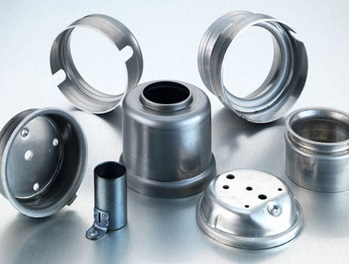
Should your hollow part be drawn or stamped? Deep drawing is one kind of stamping. It shapes a flat piece of metal into an open, hollow part. A cup, a box or a stepped shape are good examples. Other stamping jobs cut, punch, bend or press patterns into flatter parts.
If draw depth matters, pick deep drawing. If the part has mostly holes, bends and flat areas, pick standard stamping.
Dechen Metal Machining has made both kinds of parts in its own factory since 2013. For deep drawing vs stamping, the part comes first, not the price.
How Deep Drawing Shapes Hollow Metal Parts
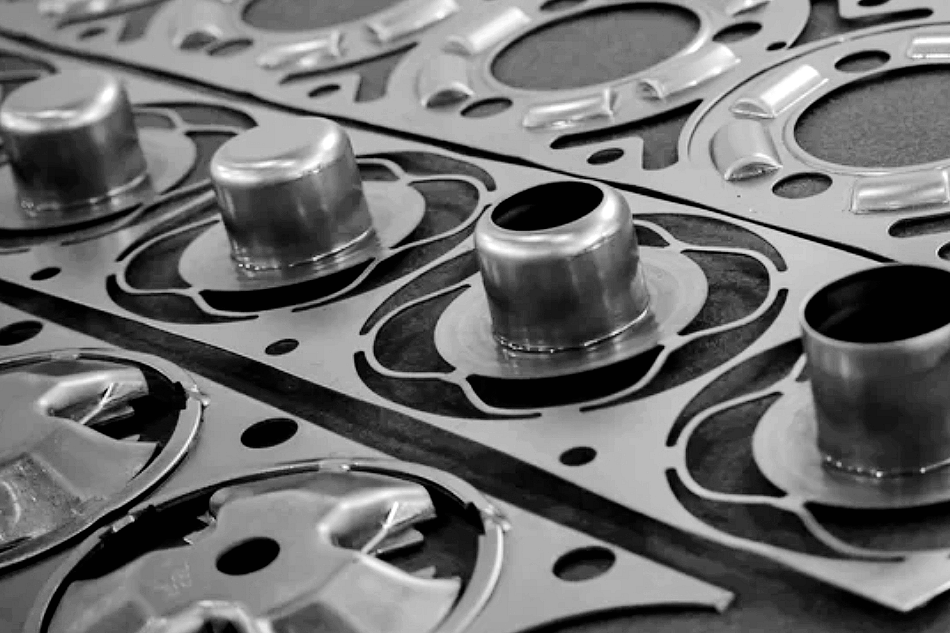
Deep drawing is a kind of stamping. A press pushes a flat metal blank into a die. The blank turns into an open, hollow part. A blank holder, also called a sleeve, grips the edges. A punch pulls the metal into the die.
Dechen’s deep-drawn parts service makes cylinders, enclosures and irregular shapes. A draw is deep when the part is deeper than it is wide. That depth is the draw depth. Parts are ½″ to 24″ wide and up to 24″ deep. Blanks can be up to 48″.
You can draw a part more than once. Each draw has its own tool. The part comes out seamless and void-free. So you usually do not need X-ray checks.

What Metal Stamping Does to Flat Sheet
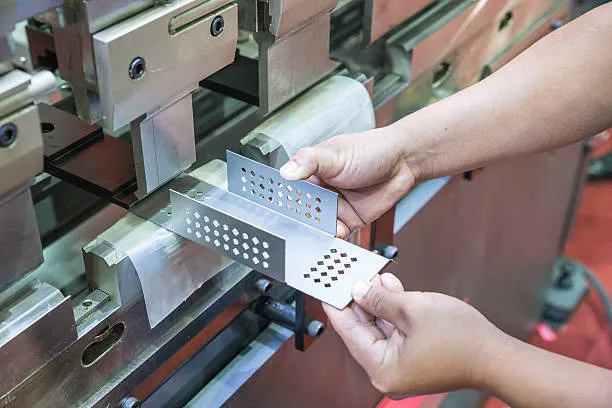
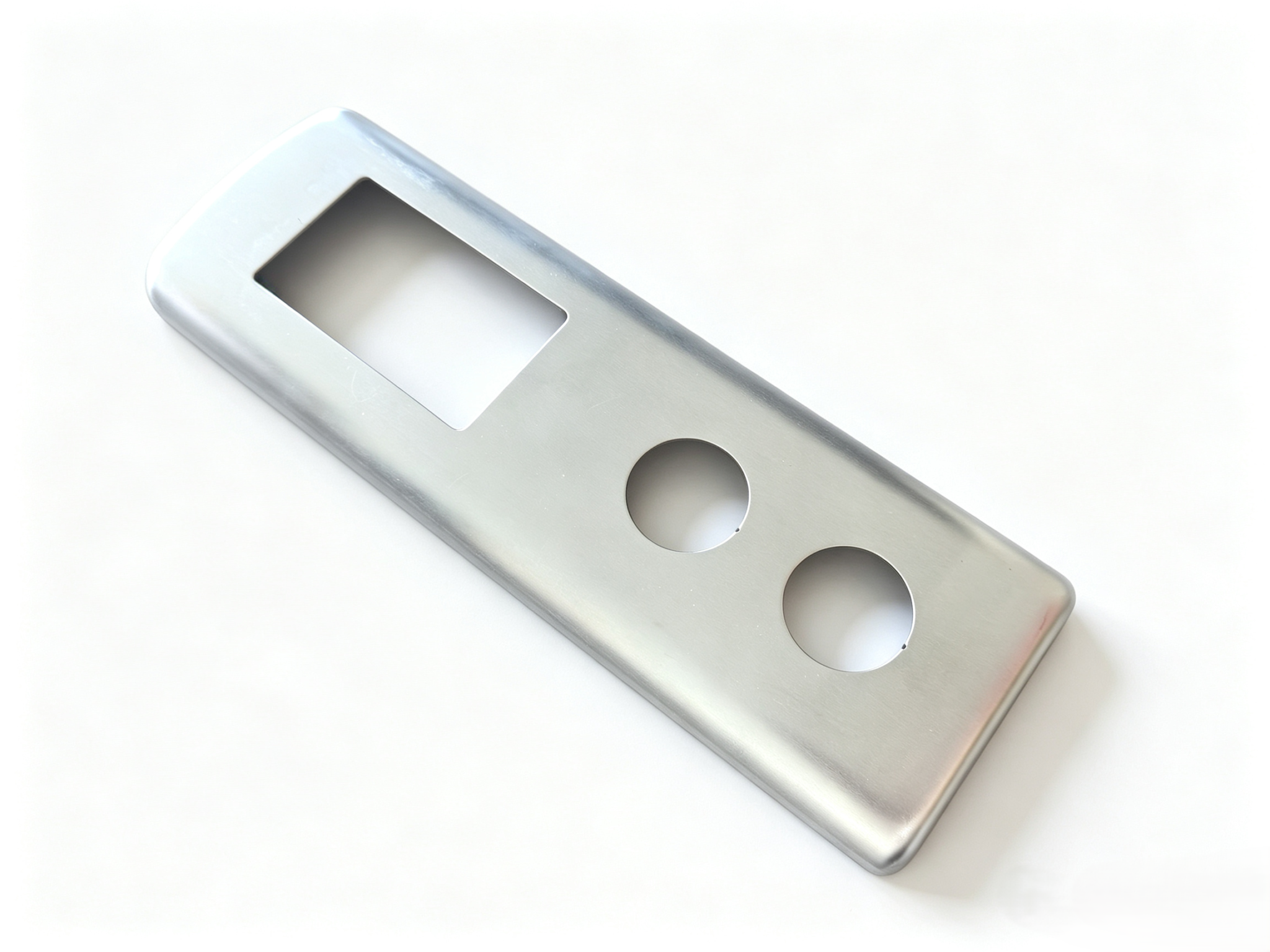
Stamping is a common sheet metal forming method. It uses custom dies and presses to cut or bend the metal. Dechen lists five operations. They are blanking, punching, bending (L, U and V shapes), drawing and embossing.
Its custom metal stamping services include progressive die, drawn and transfer stamping. The tolerance is ±0.05 mm in mass production. The metal can be 0.2 to 8 mm thick. Parts can be as thin as 0.005 in.
Drawing is one kind of stamping. So the choice is a deep, hollow shape or a flat, cut or bent shape.
Deep Drawing vs Stamping: Key Differences
Deep drawing vs stamping comes down to how the metal moves. Deep drawing pulls the flat blank into a deep shape. Stamping mostly cuts and bends it.
Side-by-Side Specifications
| Factor | Deep Drawing | Standard Stamping |
| Part shape | Open hollow: cylinders, boxes, stepped, irregular | Flat or bent parts with holes, bends, embossing |
| Draw depth | Up to 24″ deep, ½″–24″ wide, from blanks up to 48″ | Not the main feature |
| Material thickness | No range published | 0.2–8 mm |
| Tolerance | Diameter and height ±0.1 mm | ±0.05 mm |
| Surface | No visible cracks or wrinkles, scratch depth ≤0.05 mm | Ra 1.6–3.2 μm |
| Seams | Seamless, void-free part | Not published |
| Speed | Progressive draw die up to 800 pcs/hour | Annual output ≥500,000 pcs |
Choose deep drawing for depth and seamless walls. Choose stamping for flat parts with ±0.05 mm limits.
Part Geometry Decides the Process First
Part geometry decides deep drawing vs stamping before cost does. Look at the shape on your drawing first. Cups, cylinders, housings, enclosures and battery cases suit deep drawing.
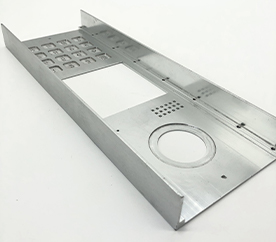
Brackets, clips and parts with many holes suit blanking, punching and bending. So do parts with L, U or V bends. Hollow metal parts with real depth rarely fit here.
Some parts need both. One progressive die can trim, draw and punch the part in a single line.
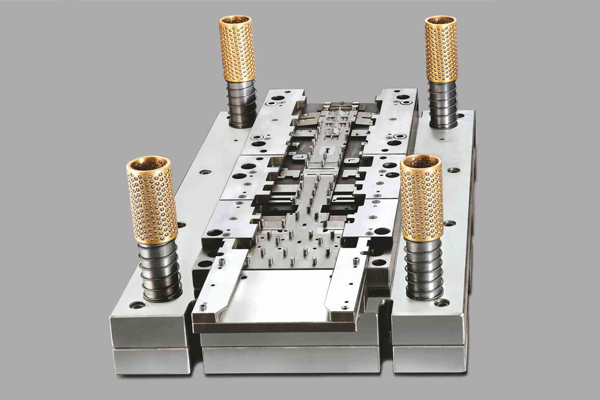
Which Forming Dies Suit Each Process?
Deep drawing vs stamping also changes the tooling. Each one uses its own forming dies.
Draw Dies for Deep Drawn Parts
- Single process die: first draw of simple cylindrical parts. Simple structure, low cost.
- Compound die: cuts and draws in one step. Holds ±0.1 mm. Suits small and medium parts such as capacitor housings.
- Progressive die: trims, draws, then punches. Runs up to 800 pcs/hour. Used for automotive mass production.
- Continuous die: a robot moves the blank. Suits large, complex parts such as fuel tanks.
Stamping Dies and Tooling
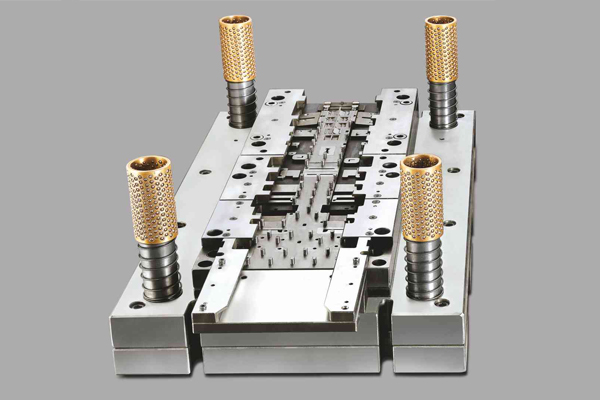
Stamping dies are made of tool steel. They are designed with CAD/CAM. Dechen builds them in its own tool and die shop. The press force is 10 to 600 tons. Tool life is 300,000 to 1,000,000+ cycles. In progressive die stamping, the metal strip moves through the stations one by one.
How Material Choice Shapes the Result
Dechen lists four metals for deep drawing. They are low carbon steel (SPCC/SPCD), stainless steel (304/316), aluminum alloy (5052/6061) and copper alloy. High-strength steel (HSS) is used more each year. It is light and strong.
Stamping uses more metals. The list has aluminum, stainless steel, cold rolled steel, titanium, copper and beryllium copper, nickel alloys and Inconel. Beryllium copper suits micro-stamping and precision connectors. Dechen can buy the metal for you. It can also use metal you supply. The full material grade list has every grade.
Dechen also deep draws and shallow draws stainless steel and titanium cases for medical devices.
Quality Risks to Plan For Before Tooling
Deep drawing vs stamping has different defect risks. Drawn parts can wrinkle, crack or spring back.
Deep Drawing Defects and Fixes
- Wrinkling: a blank holder with the right holding force
- Cracking: make the punch and die corner radius at least 4 times the material thickness. Lubricate the die.
- Springback: over-draw the part or add a shaping step
Checks start with the first piece. At least 5% of each batch is then sampled. Hardness and hole expansion tests check ductility.
Stamping holds ±0.05 mm in mass production, not only on samples.
Which Industries Use Each Process?
Both processes serve many fields. Each one has a slightly different mix.
Where Each Process Shows Up
- Deep drawing: automotive, consumer electronics, household appliances, energy and aerospace
- Medical deep drawing: battery cases, surgical instrument components and sensor housings
- Stamping: hardware, automotive, aerospace and medical
Cost and Volume: When Each One Pays Off
Both processes need a die. You pay for that tooling once. The cost per part drops as the order grows.
In deep drawing vs stamping, volume drives cost. A progressive die is usually not worth it for small orders. For short runs of simple parts, drawn stamping is often better. The die price depends on your part drawing. That is why how much a stamping die costs changes from job to job.
Deep drawing cuts scrap by 30–50% compared with machining or welding. This number does not compare it with stamping.
For very small orders with no die at all, Dechen also offers sheet metal fabrication. Delivery takes 5 to 10 days.
Choosing a Partner for Both Processes
Choose one shop that can make both. That ends the deep drawing vs stamping debate. The part picks the process, not the shop’s limits.
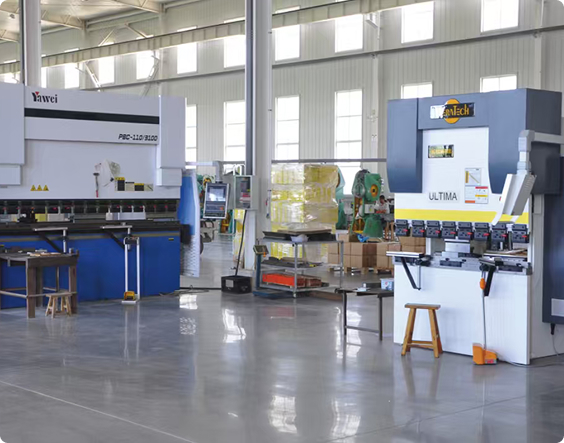
Cangzhou Dechen Metal Products Co., Ltd. was founded in 2013 in Nanpi County, Cangzhou, Hebei. The factory covers over 10,000 m². It has 80+ precision machines and an in-house tool and die shop. Its quality system is certified to AS9100D, ISO 9001:2015 and ISO 13485:2016. Dechen’s factory profile lists the founding year, factory size and machines.
Dechen focuses on metal forming. It covers stamping, deep drawing, sheet metal and CNC. Extra work comes under one purchase order too. It includes anodizing, passivation, heat treating and CNC.
FAQs
Should I use deep drawing or stamping?
Use deep drawing for hollow, seamless parts where depth matters. Use stamping for flatter parts with holes and bends.
- Dechen’s engineers look at your drawing
- They suggest the best way
What is the difference between deep drawing and stamping?
Deep drawing is one kind of stamping. It pulls a flat blank into a deep, open shape.
- Other stamping jobs cut, punch, bend or emboss
What shapes can be deep drawn?
You can deep draw cylinders, boxes, stepped shapes, enclosures and irregular shapes.
- Width: ½″ to 24″
- Depth: up to 24″, from blanks up to 48″
Which metals can be deep drawn?
You can deep draw low carbon steel, stainless steel, aluminum alloy and copper alloy.
- Steel grades: SPCC/SPCD, 304 and 316
- Aluminum grades: 5052 and 6061
Accuracy and Quotes
Deep Drawing vs Stamping: Which Is More Accurate?
Stamping is more accurate, at ±0.05 mm. Deep drawn diameter and height hold ±0.1 mm.
- The stamping number is for mass production
- Check your key dimension against both numbers
How fast can I get a quote?
You get a binding quote within 24 hours. Send 2D drawings or 3D CAD files. Your files stay under NDA.
- Formats: STEP, STP, IGS, X_T, DWG, DXF and PDF
- File size: up to 50 MB
Conclusion
Start with your part geometry. Then check your order volume. Then check the material. Deep drawing suits hollow, seamless parts with real depth. Stamping suits flat parts with holes and bends.
Dechen Metal Machining makes both in one factory in Hebei, China. It has its own tool and die shop, so the process fits your part. Send your drawings today to request a custom quote. You get a binding quote within 24 hours, plus an NDA and full material traceability.