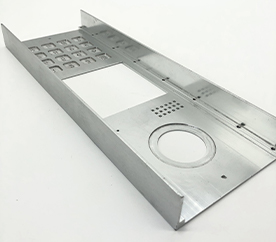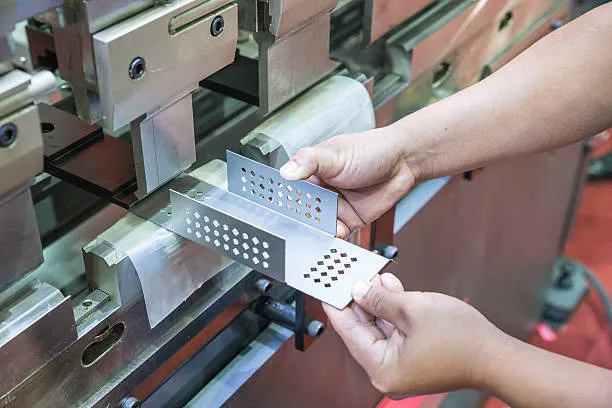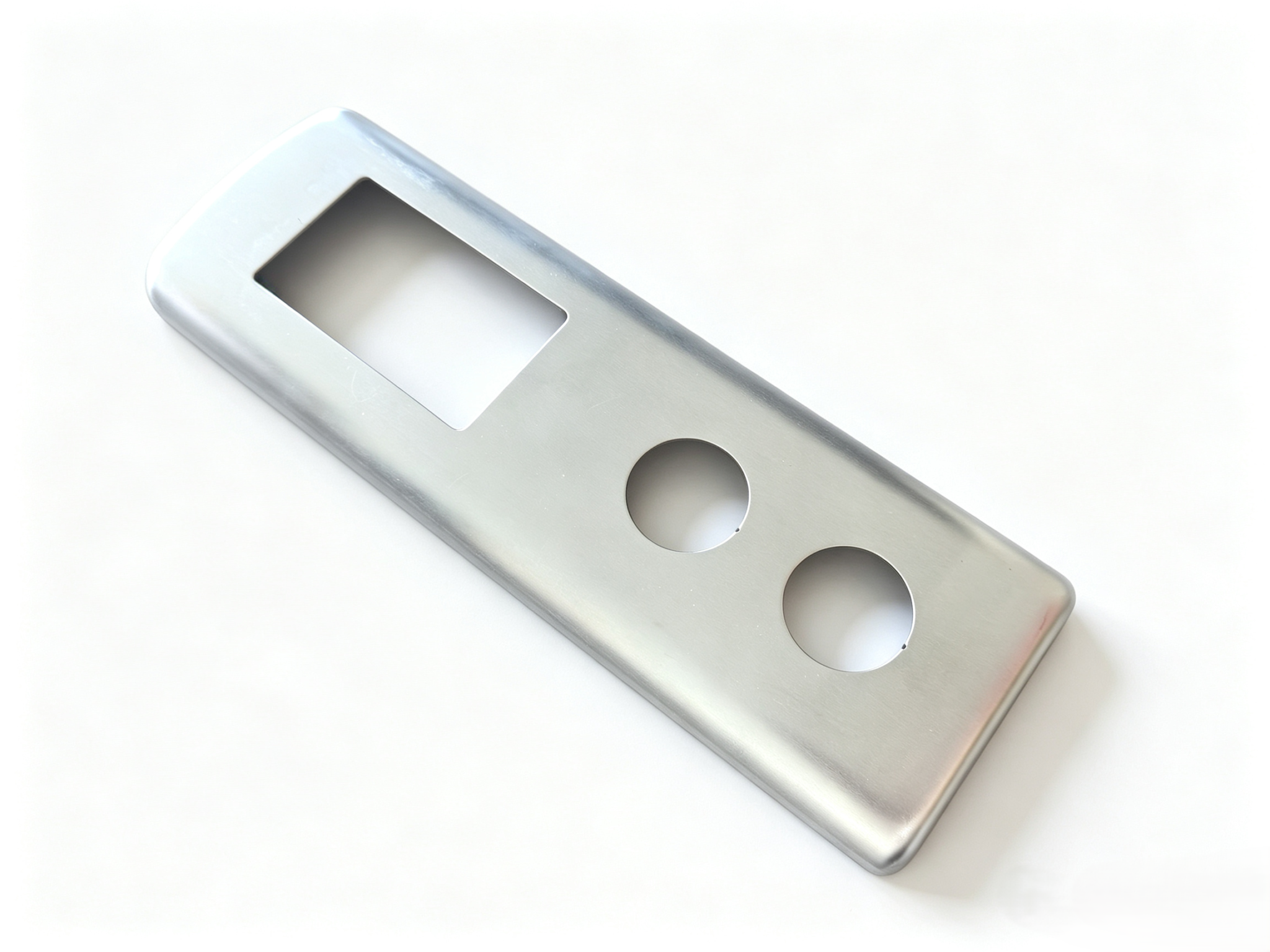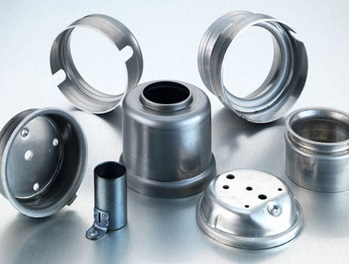
The deep drawing process is a way to shape metal. A press pushes a flat metal blank through a die. The blank turns into an open, hollow part, like a cylinder, a box or a stepped shape. The part has no seam.
Buyers like it for two reasons. The part has no seam. Very little metal is wasted. So the cost stays low, even for big orders. Dechen Metal Machining has made deep drawn parts in Hebei, China since 2013.
What Happens When a Flat Blank Is Drawn?
What Is Deep Drawing?
Pressure pushes a flat metal blank through a die. The blank bends into an open, hollow part. It can be a cylinder, a box or a stepped shape.
Dechen makes cylinders, enclosures and irregular shapes. Its custom deep-drawn parts are complex, but the cost stays low.

When Does a Metal Draw Count as Deep?
A draw is deep when the part is deeper than it is wide. This depth is called the draw depth. A shallow cup needs a light draw. A tall can or a narrow housing is harder. The metal must move far into the die.
The Deep Drawing Process, Step by Step
- Choose the right sheet metal.
- Cut and prepare the blank.
- Draw the blank into the die.
- Redraw, trim and finish the part.
Step 1: Choosing the Right Sheet Metal
First, pick the metal. Some buyers do not choose an alloy. Dechen’s engineers help them find the right grade. Dechen usually buys the metal. It can also use metal the customer sends. The metal grades for deep drawing include steel, stainless steel, aluminum and copper alloys.
Step 2: Cutting and Preparing the Blank
The metal is cut into sheet metal blanks of the right size. Each blank is prepared to fit its own type of metal. This protects the alloy. It also helps stop cracks and tears.
Step 3: Drawing the Blank Into the Die
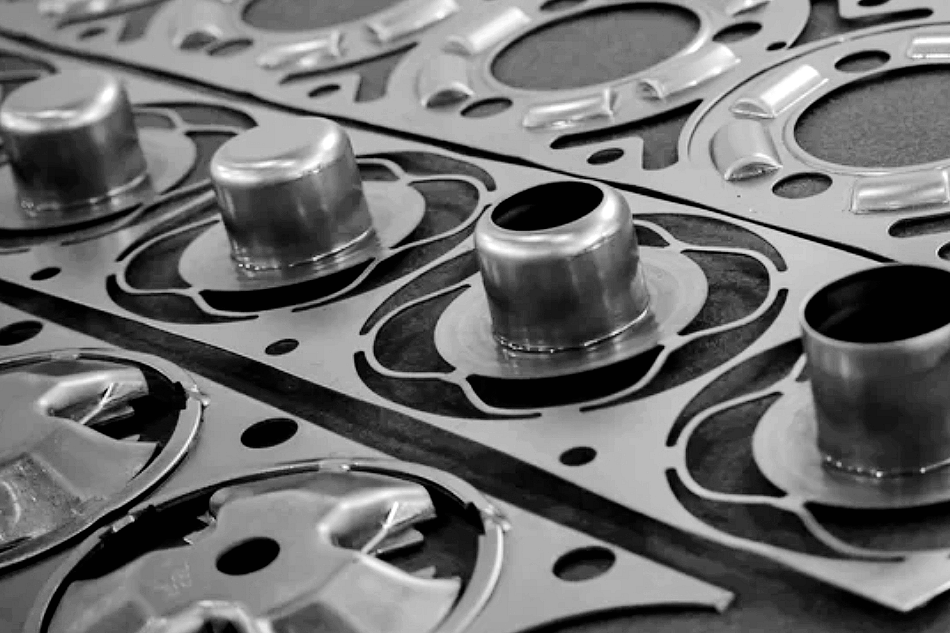
Now the blank is formed. The punch pushes the blank down. The blank is pulled through the die. A blank holder, also called a sleeve, holds the edges. This keeps the metal from folding.

Step 4: Redrawing, Trimming and Finishing
Some parts need more than one draw. Each draw has its own draw tool. Other steps include single-stage and multi-stage drawing, ironing, necking, flanging and trimming.
Extra work may follow. This can be anodizing, CNC machining, passivation or heat treating. All of it can be done under one purchase order.
Punch and Die: The Tools Behind the Draw
How the Blank Holder Stops Wrinkles
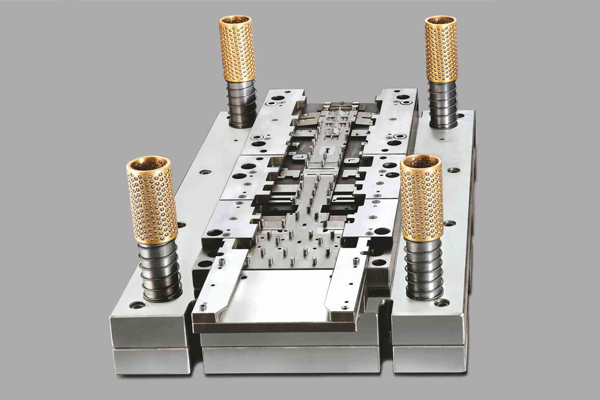
Three tools do the work. The punch pushes the metal down. The die shapes the outside of the part. The blank holder presses on the edge of the sheet.
The holding force matters. If it is too low, the edge wrinkles. If it is too high, the metal cannot move. It may tear. So the force must be set with care.
Four Draw Die Types and When to Use Them
| Die type | How it works | Best for |
| Single process die | Makes the first draw of a simple cylindrical part. The structure is simple and the cost is low. | Simple cylindrical parts |
| Compound die | Blanking and drawing happen in one tool. It holds ±0.1 mm. | Small and medium parts, such as capacitor housings |
| Progressive die | The part moves through several stations: trimming, then drawing, then punching. It runs up to 800 pieces per hour. | Automotive mass production |
| Continuous die | A robot moves the blank from one station to the next. | Large, complex parts, such as automobile fuel tanks |
How Does Metal Flow Inside a Drawing Die?
As the punch moves down, the sheet moves inward and down. Each part of the metal feels a different force.
Compression Builds Up in the Flange Area
The flange is the edge of the blank. It sits outside the die opening. The punch pulls this metal inward. The metal has less room, so tangential compressive stress builds up. Too much stress makes the metal unstable. Then wrinkles form.
Tension Peaks at the Die Corner Radius
Tensile stress builds up in the wall at the die corners. Engineers call this the dangerous section. Cracks start here.
Common Draw Defects and How to Prevent Them
| Defect | Cause | Fix |
| Wrinkling | Too much compressive stress in the flange makes the metal unstable. | Use a blank holder. Adjust the holding force. |
| Cracking | Tensile stress is high in the wall at the die corners. | Make the punch and die corner radius at least 4 times the material thickness. Lubricate the die to cut friction. |
| Springback | The metal partly returns to its old shape after forming. | Use over-drawing or an extra shaping step to make up for it. |
How Deep and How Large Can a Drawn Part Be?
Dechen starts with blanks up to 48″ in diameter. The finished parts are ½″ to 24″ wide. They can be up to 24″ deep. That depth is the draw depth.
Seamless Walls From Multi-Stage Draws
A part can be drawn several times. Each draw has its own tool. The part comes out seamless, with no voids. This usually removes the need for X-ray checks.
What Makes a Drawn Housing Worth Choosing?
- Shape complexity. The process can make deep cavities, many curved surfaces and tiny features. Other methods find these hard to make.
- Material use. Scrap drops by 30 to 50% compared with machining or welding. Less scrap means lower cost.
- Flexible output. Volumes run from prototypes up to 800 pieces per hour. Only progressive dies reach that top rate.
Where Drawn Housings Are Used Today
Drawn housings are used in automotive, consumer electronics, household appliances, and energy and aerospace.
Medical work is a good fit too. Dechen makes deep drawn medical device parts such as battery cases, sensor housings and surgical instrument parts. It uses stainless steel and titanium.

How Each Drawn Part Is Checked for Quality
Diameter tolerance is ±0.1 mm. Height tolerance is also ±0.1 mm. The surface must have no visible cracks or wrinkles. No scratch may be deeper than 0.05 mm.
A hardness test and a hole expansion test check the ductility of the metal. Each batch starts with a first-piece inspection. After that, at least 5% of each batch is sampled.
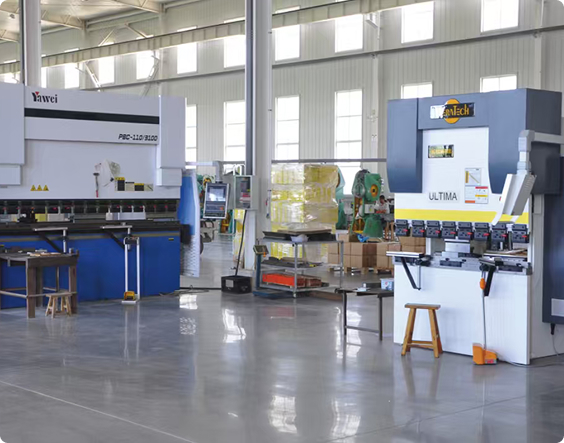
Inside Dechen’s Deep Drawing Workshop
Factory Scale and a Focus on Metal Forming
Dechen started in 2013 in Nanpi County, Cangzhou, Hebei. Its factory has over 10,000 m² of floor space and 80+ sets of precision equipment. The company profile says the same.
Its focus is metal forming. That means stamping, deep drawing, sheet metal and CNC machining.
Quality System, Quotes and Delivery
Quality control covers every step, from incoming material to final delivery. The company states full compliance with ISO 9001 standards.
A binding quote comes within 24 hours. An NDA and material traceability come with it. Dechen takes STEP, STP, IGS, X_T, DWG, DXF and PDF files, up to 50 MB.
FAQs
-
What materials are suitable for deep drawing?
You can use low carbon steel (SPCC/SPCD), stainless steel (304/316), aluminum alloy (5052/6061) and copper alloy. High-strength steel (HSS) is used more and more. Titanium is used for medical cases.
-
Is deep drawing a type of metal stamping?
Yes, deep drawing is one kind of stamping. It shapes a flat sheet into a hollow part. The right pick between deep drawing vs stamping depends on the part.
-
How accurate are deep drawn metal parts?
Deep drawn parts hold ±0.1 mm on both diameter and height. A compound die holds ±0.1 mm too.
-
Can one part need more than one draw?
Yes. A deep part often needs several draws. Each draw uses its own tool.
-
How fast can I get a deep drawing quote?
You get a binding quote within 24 hours.
Conclusion
Deep drawing turns a flat metal sheet into a hollow part with no seam. First, you pick the metal. Then the blank is cut and drawn through the die. At the end, the part is finished. Each step needs care, so the part comes out right.
A good draw leaves little waste. Send your 2D or 3D files to Dechen Metal Machining. The engineers will check the specs, the tolerances and the metal. Request a deep drawing quote to get started.