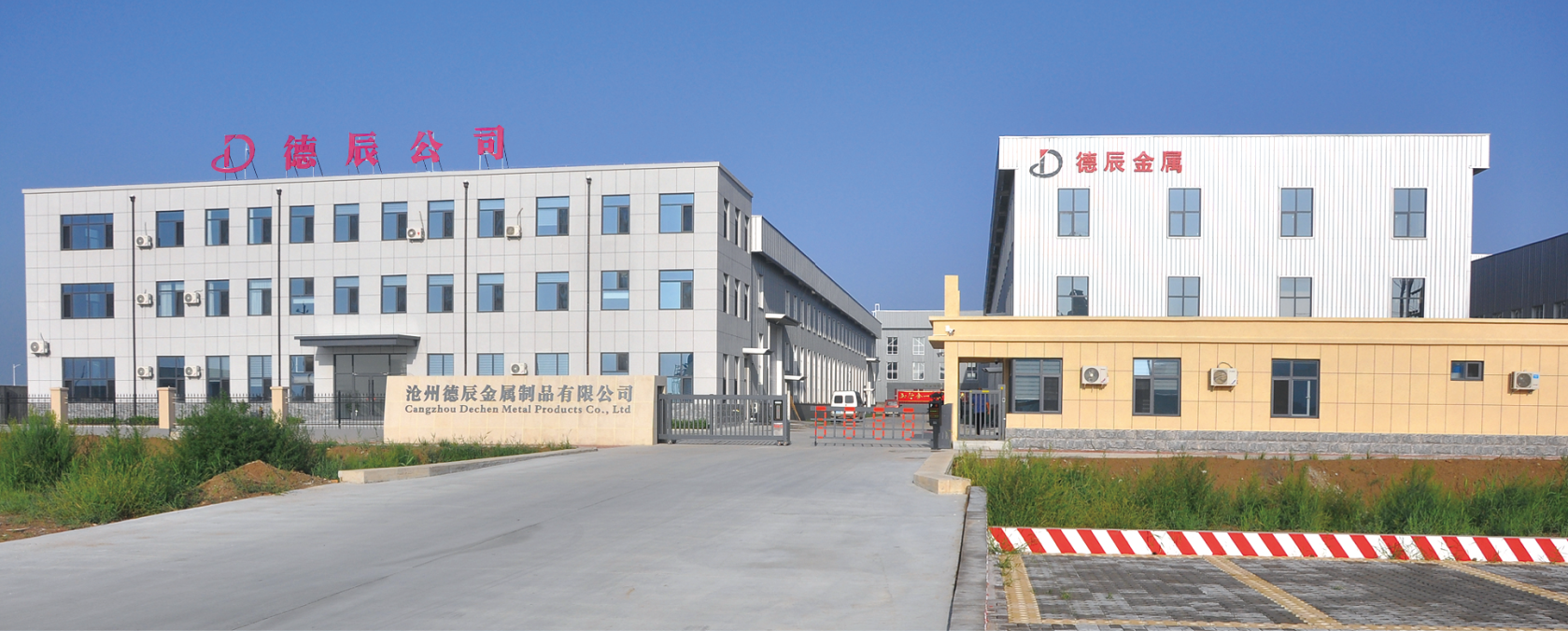
DC custom sheet metal services offer a cost-effective and on-demand solution for your manufacturing needs. From one off prototypes to low-volume production, we offer a variety of manufacturing methods, material properties, and finishing options. Our partner factories have vast capacity and use state-of-the-art equipment to manufacture your bespoke parts.

By fully-automated CNC laser cutting, CNC punching, CNC panel bending & laser welding along with conventional fabricating processes. Our sheet metal services offer a fast and cost-effective solution for sourcing durable, prototype or end-use metal parts that meet the specifications for industries such as aerospace, lighting, automotive, food beverage, electronic, hardware and medical industries.
DC excels at producing high precision, complex parts for the most demanding applications, simply tell us what you need then trust DC to manage the whole process for you.
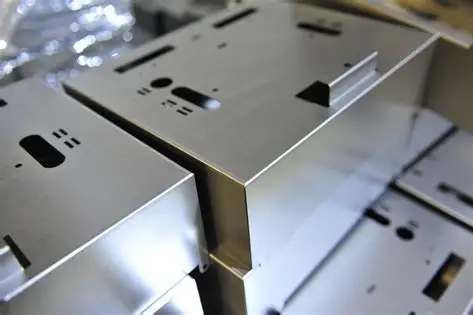
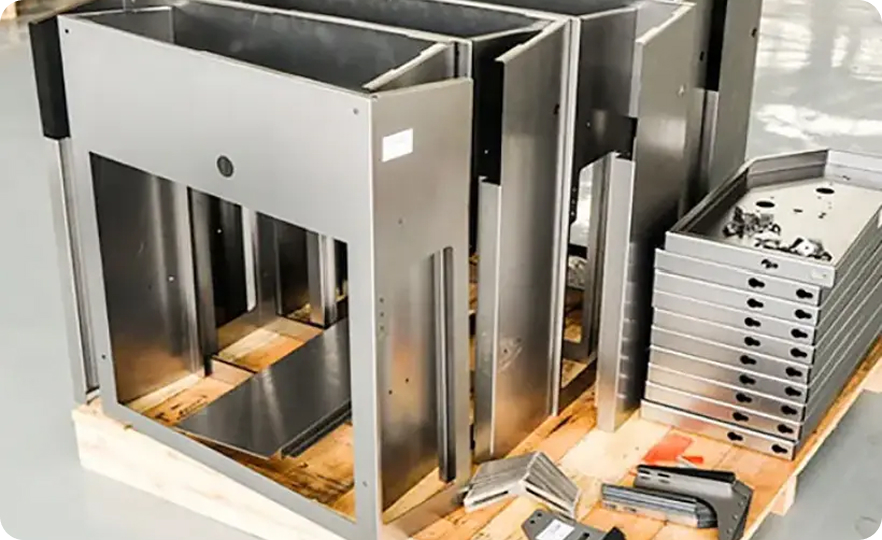
DC can turn sheet metal parts and assembles around as quickly as 5 to 10 days.We provide sheet metal fabrication service to customers. Our project history in sheet metal fabrication is diverse, we have produced a variety of high quality body panels, chassis, enclosures, office and kitchen equipment, cases, brackets, and other items.
Offering precision to tolerances and short turn around times for all our sheet metal products, our sheet metal fabrication always meet high industry standards and customer expectations for quality.
Perform a variety of welding process such as CO2 welding, spot welding, argon welding depending on the characteristics of metal and specifications of the design.
Punching tolerance up to ±.001″.Finishing services options.
Before a finished custom sheet metal work can be provided to the customer, there are numerous sheet metal fabrication techniques that must take place. Sheet metal fabrication comprises several processes and tools depending on the application it serves. Along with bending, punching, and forming, we carry out a variety of metalworking processes, such as deep drawing, laser cutting, waterjet cutting, and stamping, among others. Processes are used either alone or in combination to generate. All these processes and tools are utilized with a common goal of converting metal sheet into a workable item. These custom sheet metal fabrication types include the following:

This type of custom sheet metal work utilizes machines such as press brakes, folding machines and stamping units to form and bend a sheet of metal.
The following processes are used for high precision custom sheet metal fabrication blanking: laser cutting, turret press, and waterjet cutting.
Certain sheet metal fabrication projects requires assembly work through processes such as welding, riveting, hardware insertion and adhesive applications.
After the metal is formed through any of the above processes, a surface finish of powder coating, plating, or anodizing is applied to the material.
To give you more complete parts that are ready to use (or as close to it as possible) upon delivery, we can provide:
Machining, Powder coating, Plating, Anodizing.
Pad printing, Silk screening, Fastener insertion, Rounding of edges.
Tumbling and finishing, Countersinking, Riveting and more.
Sheet metal is made from a wide range of metals and metal alloys. We offer a full spectrum of custom fabrication capabilities for a wide range of sheet metals.Some of the most common metals used for fabrication include:
Aluminum, Aluminized metal, Copper, Stainless steel.
Carbon steel, Cold-rolled steel, High-strength steel.
Galvanized steel, Galvalume, Hot-rolled steel, Titanium.
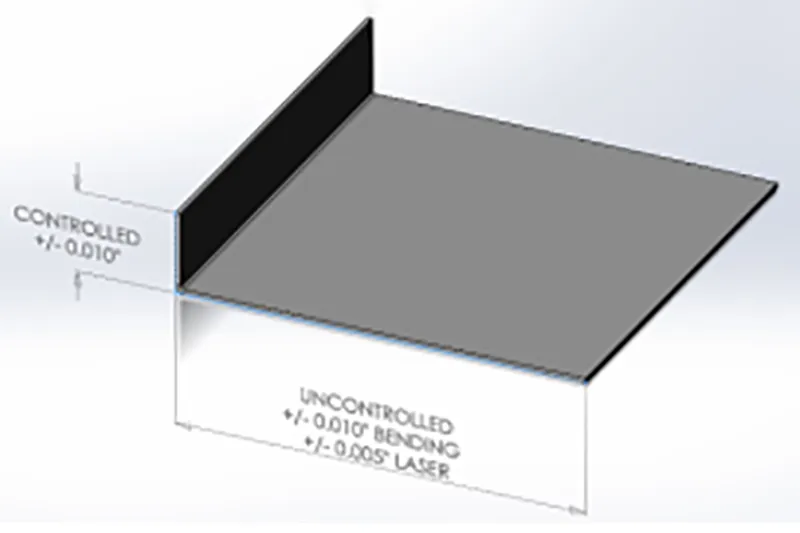
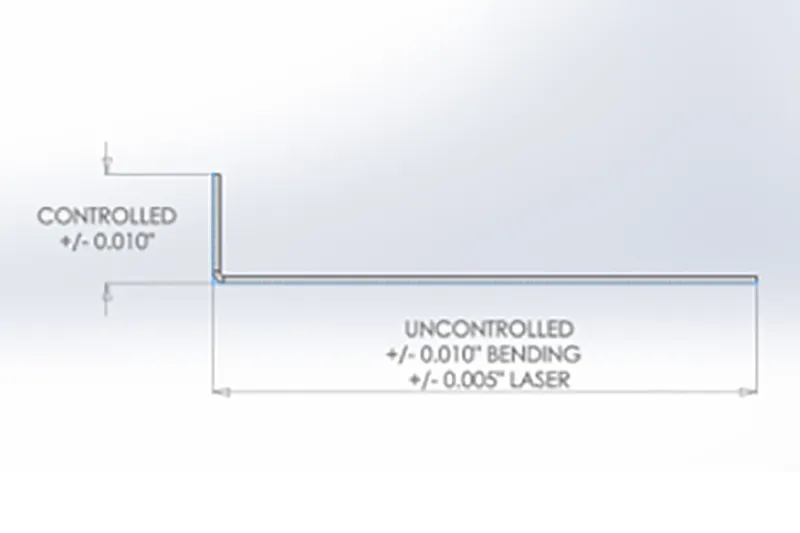
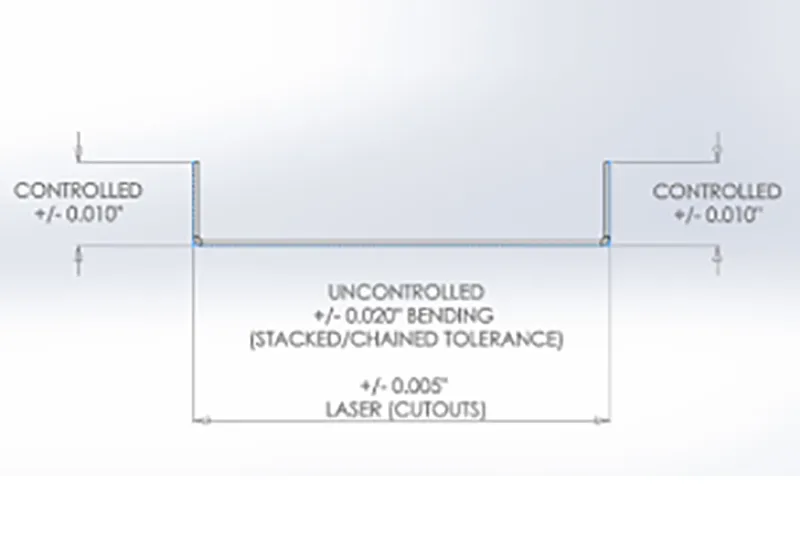
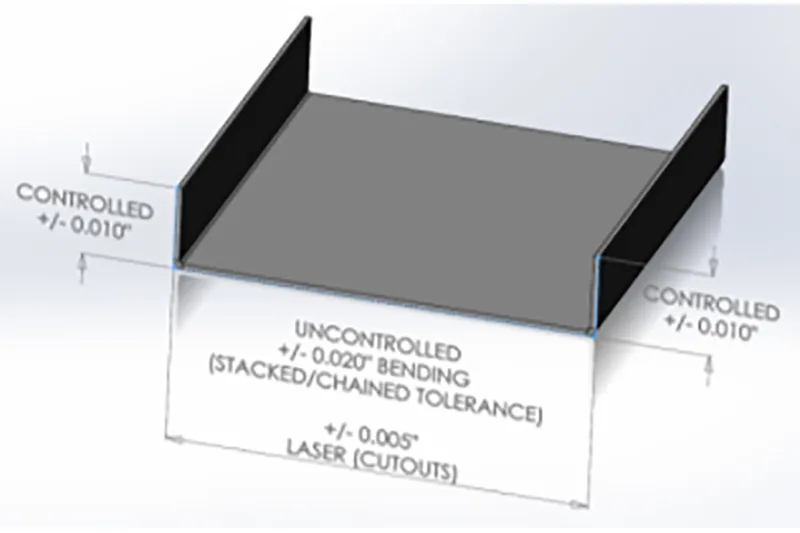
There are many factors that influence sheet metal tolerance.Knowing the sheet metal tolerance is essential to create a high-quality prototype. You need an experienced sheet metal fabricator to do the job right.Sheet metal tolerance should not be tighter than necessary to make the part functional.Tight tolerance raise the cost of manufacturing significantly.Practical tolerances vary according to the design requirements.Tolerance of +/-.010 should be considered minimum.Linear tolerances should be held as loose as possible. Recommend+/-.020 for general,and tolerance functional areas are needed.
Sheet metal fabrication isn’t just about cutting and bending. In cases where multiple metal parts need to be joined, welding and riveting become important operations.
When dealing with tight tolerances and thin wall products, the heat produced by welding has a direct effect on metal quality.As a rule, heat should be minimized whenever possible.
MIG Welding · TIG Welding · Spot Welding
Rivets are used to fasten two or more pieces of metal together and can be purchased in steel, stainless steel, and aluminum. The advantages of riveting over welding include their ability to fasten dissimilar materials together or their ability to fasten areas that are not accessible to other processes.
Solid Rivets · Semi-Tubular Rivets · Blind Rivets
At DC, we provide one-stop-shop for sheet metal fabrication and provide complete, turnkey parts, components, and assemblies. We provide inclusive, comprehensive solutions, including sheet metal fabrication, precision metal stamping, and sheet metal prototyping and engineering services. Request a quote on your precision fabrication project on tight deadlines, or contact us to find out what we can do for you.
Learn more about other manufacturing processes that may interest you.
Contact us today to share your requirements and get a competitive quote. Let DC be your trusted strategic partner in China.
Upload your 2D drawings or 3D CAD models. Our engineering team will review your specifications, material requirements, and tolerances to provide a detailed, binding quotation within 24 hours.