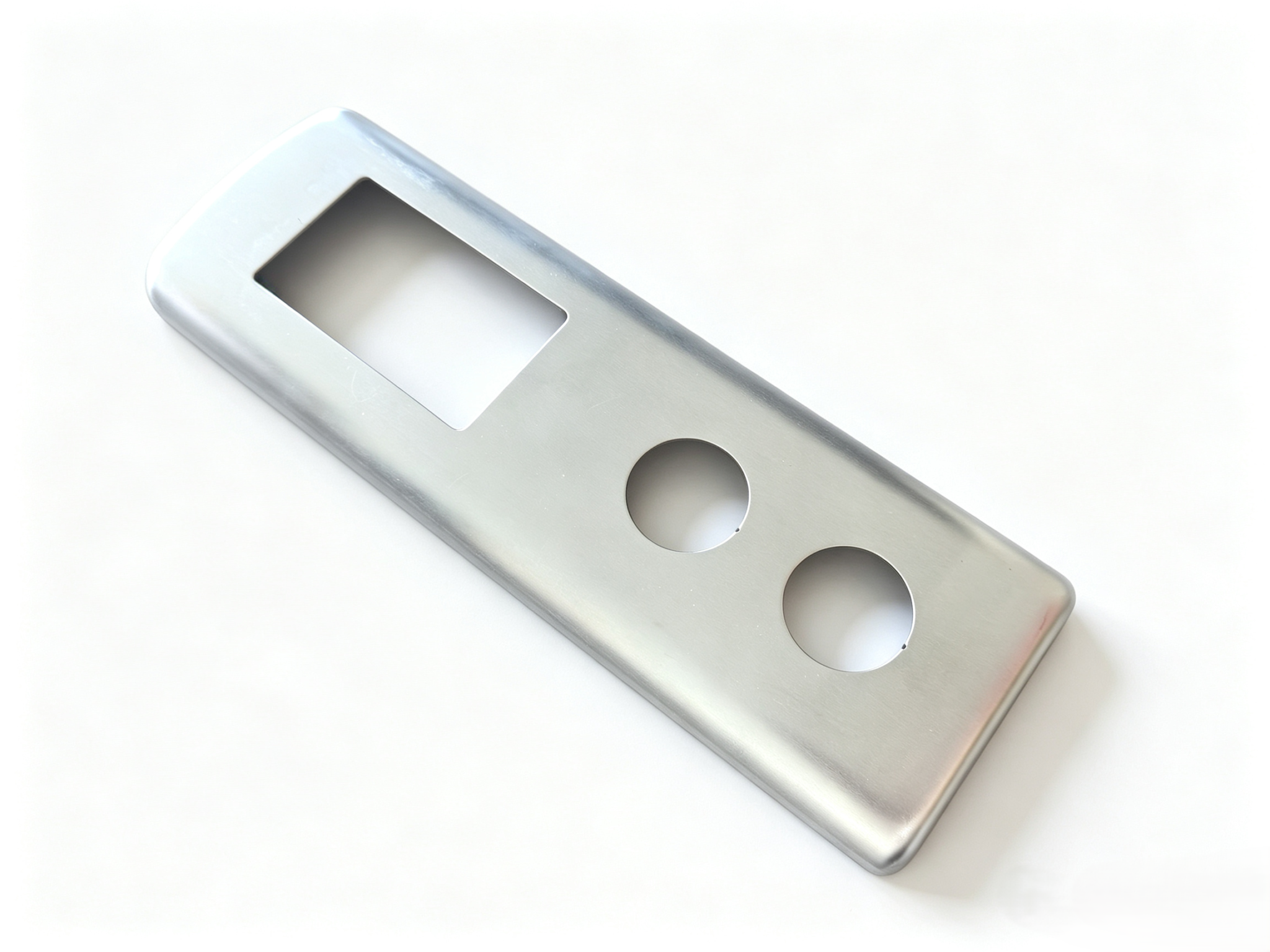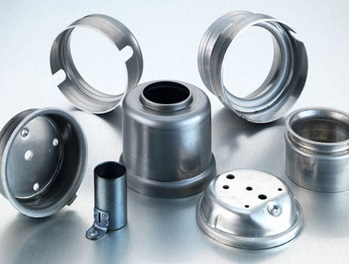
How exact does a metal part need to be before we call it precise? Buyers and engineers ask this all the time. Precision metal components are metal parts made to very exact sizes. They are shaped by stamping, deep drawing, sheet metal work or CNC machining, so they fit and work as planned.
Dechen Metal Machining has made precision-engineered metal parts in Cangzhou, China, since 2013. Its main lesson is simple. The right process and the right metal matter just as much as the drawing.
This guide shows where these parts are used and which metals suit them. It also explains how each process works and what to check in a supplier.
What Precision Metal Components Really Mean
A Clear Definition for Engineers and Buyers
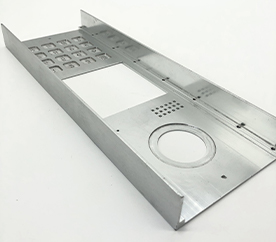
“Precision” means three things. The size is controlled. Every part comes out the same. The surface is clean and smooth. You can see real precision metal components made for many industries.
Key Facts at a Glance
| Factor | What It Means |
| Main processes | Stamping, deep drawing, sheet metal work, CNC machining |
| Key measure | Tolerance, the allowed size difference from the drawing |
| Main sectors | Automotive, medical, electronics, agriculture, aerospace |
Why Tolerance Separates Precision Parts
The extent to which a real part might differ from the drawing is known as tolerance. The stamped parts from Dechen can maintain a tolerance of 0.05 mm. Therefore, a part can turn out to be somewhat larger or smaller than planned, within a margin of 0.05 mm. A sheet of paper is nearly half that thick.
Tight tolerances result in higher cost. Only a few critical spots in the majority of precision metal components need them. It saves money to be a little bit more relaxed with the rest.
Where Are Precision Parts Used Today?
When a part has to fit perfectly, precision metal components are employed. When there is no space for mistakes, they also seal or safeguard objects.
Medical Accessories and Device Enclosures
Small, intricate cases are required for medical tools. A smooth, easily-cleaned surface is required. Because they don’t rust quickly, stainless steel components are a common choice. When a part has to be light, Titanium metal parts function effectively.
Automotive Parts That Handle Daily Stress
Car parts are exposed to heat, vibration, and road salt every day. Brackets, housings, and fittings are usually stamped, deep-drawn, or CNC-machined. Progressive metal stamping is a good option when a carmaker requires large quantities.
Electronics Housings and Protective Shells
Metal shells that guard the circuit boards inside are necessary for electronics. Deep drawn metal parts accomplish this well. They are of one piece, without a seam, and constitute a single hollow body.
Aerospace, Defense, and Agriculture Uses
These fields need robust housings that can take rough use. Farm machines deal with dust and mud. Defense parts must pass strict checks.
The Core Processes Behind Every Part
Precision metal components are made with four main processes: stamping, deep drawing, CNC machining and sheet metal work. Each one suits a different shape, order size and level of detail.
Progressive Metal Stamping for High Volume
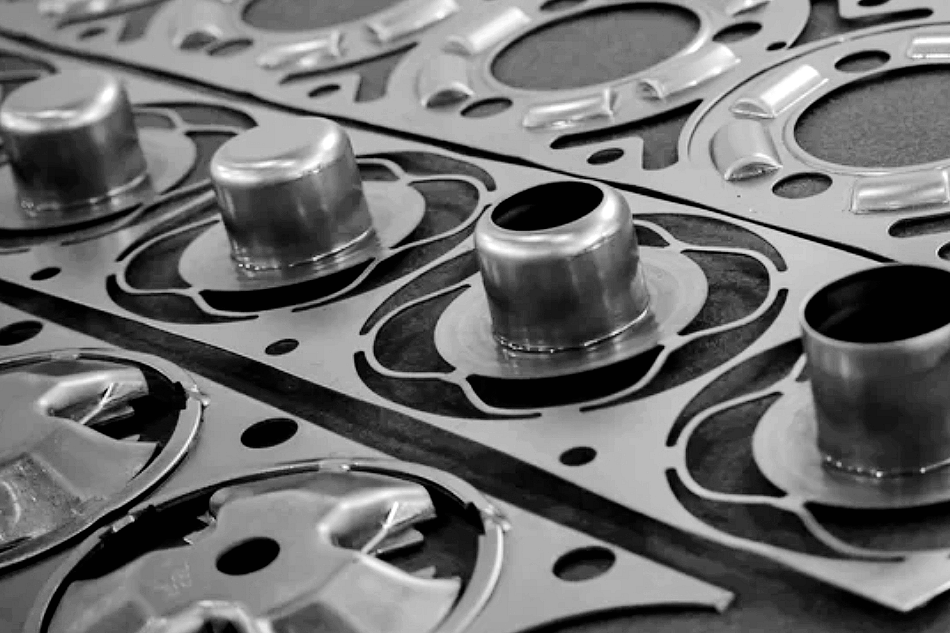
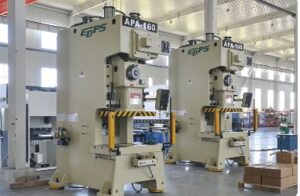
Progressive metal stamping moves a metal strip through a die with several stations. Each station adds one feature. Dechen’s custom metal stamping services use dies it builds in-house. It offers progressive, transfer and deep stamping, with tolerances down to ±0.05 mm. The die costs money at the start, but each part gets cheaper as the order grows.
Deep Drawn Metal Parts for Hollow Shapes
Deep drawing presses a flat metal sheet into a die to make a hollow shape, like a cylinder or a housing. Dechen’s custom deep-drawn parts have a very good surface finish. Several die options cover everything from samples to mass production. With no seam, these shells are strong and do not leak easily.
CNC Machined Metal Parts for Fine Detail
CNC machining uses computer-guided tools to cut metal away. It can make features that pressing cannot, such as threads and deep pockets. Dechen’s CNC machining solutions include 5-axis milling, turning and wire EDM. The company states accuracy of up to ±0.0001 inches. CNC machined metal parts need no die, so they suit small orders.
Sheet Metal Fabrication for Enclosures
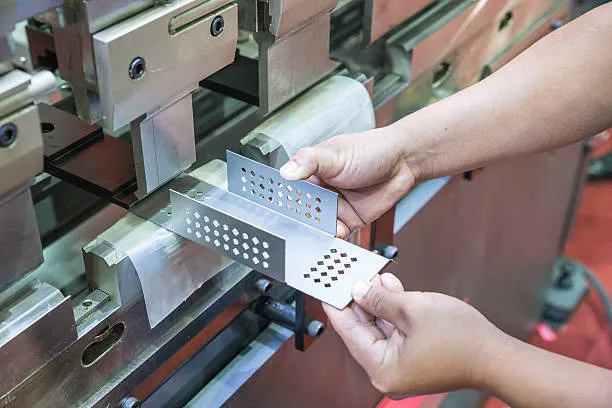
Sheet metal work uses laser cutting, bending, welding and assembly. It makes cases, brackets and panels. Dechen offers all of these steps in one place, with delivery in 5 to 10 days.
How the Four Processes Compare
| Process | Best For | Typical Shapes | Order Size |
| Stamping | Flat or formed parts | Brackets, clips, plates | Large orders |
| Deep drawing | Hollow parts with no seam | Cups, cylinders, housings | Samples to mass production |
| CNC machining | Fine features | Threads, pockets, detailed blocks | Samples and small orders |
| Sheet metal | Bent or welded parts | Cases, panels | Small to medium orders |
Pressing is best for large orders and hollow shells. Machining is best for fine detail. Many custom metal components use both, such as a drawn shell with machined threads.
Choosing the Right Metal for the Job
The metal you pick decides how strong, heavy and rust-proof a part will be. Look at the full list of supported metal materials before you finish your design.
Stainless Steel Components Resist Corrosion
Stainless steel does not rust readily. Chromium forms a thin protective film on the surface of the metal. Dechen lists grades 301, 304, 316/316L, 321, 410, 420, 430, 440 and 17-4PH. Grade 316L also contains molybdenum, which helps it to resist salt corrosion.
Titanium Metal Parts: Balance, Weight, and Strength
Titanium is strong, light, and rust-resistant. It weighs about 40% less than steel of the same size. It’s harder to cut and costs more. It thus best fits high-end medical and car parts.
Kovar Metal Parts for Glass-to-Metal Seals
Iron, nickel, and cobalt make up the Kovar mix. It grows at about the same rate as hard glass when heated, however. As the temperature changes, this means the metal and glass remain joined. That is why Kovar metal parts are used in sealed electronic packages.
Aluminum, Copper and Nickel Alloy Options
- Aluminum: Grades 1050, 1060, 1100, 3003, 5052, 5754, 6061, 6063, 6082 and 7075. It is light and easy to draw into shape.
- Copper and beryllium copper: Grades such as C101, C110, C145, C172, C173, C360 and C464.
- Nickel alloys and Inconel: They stay strong in high heat.
- Cold rolled steel: A low-cost metal with a smooth surface.
Finishing Steps That Protect the Part
Finishing is the work done after a part is shaped. It protects the part, marks it or gets it ready to use.
Common Finishing Options
- Heat treatment: Makes the metal harder or stronger.
- Passivation: Helps stainless steel fight rust.
- Anodizing: Adds a hard, protective layer to aluminum.
- Painting and tumbling: Painting adds a coat. Tumbling smooths rough edges.
- Laser marking: Adds part numbers that will not wear off.
- Laser welding, assembly and packaging: Gets parts ready to install.
Dechen offers these as secondary finishing processes. So precision-engineered metal parts arrive ready to use.
How Custom Metal Components Are Made
Custom metal components follow a clear path from file to shipment. First, you send 2D drawings or 3D CAD files. Next, engineers check the sizes, metal and tolerances. You get a quote within 24 hours.
Then a sample part is made so you can test the fit. Once you approve it, production starts as a small batch or a full run. Finishing, inspection and packing come last.
Here is a simple tip. Only ask for tight tolerances where the fit really needs them. This lowers your quote and speeds up the review.
What to Check Before You Pick a Supplier
Factory Scale and Equipment Capacity
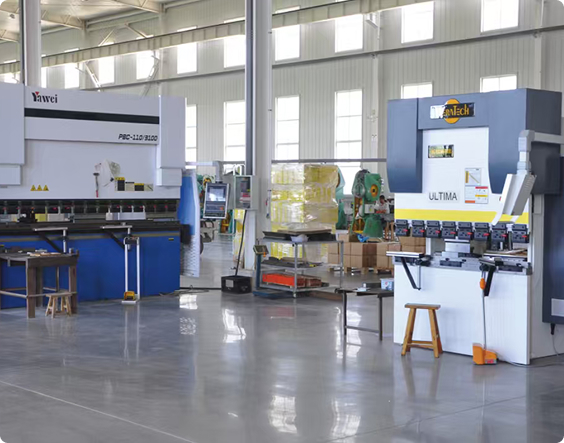
A bigger factory can grow with your orders. For precision-engineered metal parts, Dechen Metal Machining has a factory of over 10,000㎡. It runs 80+ high-precision machines and has been working since 2013.

Quality Systems and Material Traceability
A good supplier of precision metal components checks parts at every stage. It can also trace each batch back to its raw metal. Dechen has a full inspection system and material tracing. It states compliance with ISO 9001 standards and signs NDAs to keep your designs private.
Delivery Cycle From Prototype to Volume
Dechen quotes within 24 hours. Sheet Metal Parts Ship in 5-10 Days. Stamping, deep drawing, sheet metal, and CNC machining are the four main areas of concentration for the company.
FAQs
What tolerance can precision metal stamping hold?
For precision stamping, the typical goal is ±0.05 mm. For its stamping job, Dechen states this. Actual outcomes depend on the design of the part.
- Thick metal is more difficult to keep within close bounds.
What is the difference between deep drawing and stamping?
Deep drawing is a type of stamping that produces hollow parts. These parts are typically as deep as they are wide. Normal stamping typically cuts, bends, or shapes flat features.
- Deep drawn metal parts are seamless cups and housings.
Which metal is best for corrosion resistance?
In terms of fighting rust, Grade 316L is one of the finest. That’s why it is used in many stainless steel components. When weight matters, titanium is another viable option.
- Titanium metal parts are light and resistant to rust.
Why is Kovar used in electronics?
Because Kovar expands with heat nearly as quickly as hard glass, it is employed in electronics. Therefore, glass-to-metal seals made with it will not crack with temperature changes.
- Kovar metal parts keep airtight packaging sealed.
Can one supplier handle prototypes and mass production?
Yes, one provider can do both if they have different processes and different possibilities. Dechen supports prototyping to mass production stamping and deep drawing.
- Fewer handoffs equal fewer errors and steadier sizes.
How long does it take to make custom metal parts?
Sheet metal parts from Dechen ship in 5-10 days. Quotes in 24 hours. Stamping and drawing parts take longer if a new die is required.
- CNC machined metal parts don’t need a die, so samples arrive quicker.
Conclusion
Good parts start with three selections. Pick the proper technique, the suitable metal, and a tolerance that fits your actual demand. Make these selections early and your quotes and samples will move more easily. Need stamping, deep drawing, sheet metal and CNC work all at one place?
A suitable fit for Dechen Metal Machining. Material tracking and 24-hour quotes speed you from drawing to final precision metal components. Send your drawings and request a custom quote.