Why does a plain metal shell need its own tool? Hardware teams ask this on almost every new build. Custom metal parts for electronics are metal parts made to a buyer’s own drawing. They cover housings, connectors, heat sinks, and brackets. Each one is shaped to fit a single device. None of them comes from a catalogue. Cangzhou Dechen Metal Products Co., Ltd. (DC Metal) in Hebei, China, has worked in precision metal forming since 2013. One lesson keeps coming back. Fit, heat, and current decide the part. The price list does not.
This guide explains what these parts are. It shows where they sit inside a device. It then covers the four ways they are formed, the metals used, and how quality is checked.
Custom Metal Parts for Electronics: A Clear Definition
A custom metal part for electronics is a part formed from sheet or bar metal. It follows the buyer’s own 2D drawing or 3D CAD model. It is not a stock item. The shape, holes, wall thickness, and tolerance all match the device. Tolerance is the amount by which a size may vary. So the part drops straight into the assembly.
A design goes custom for one of two reasons. Either the shape does not exist as a stock item. Or the fit is too tight for a standard part to hold. DC Metal builds parts from the files a customer sends. It takes prototype work, small batches, and mass production.
Catalogue Part or Custom Part: What Changes?
| Factor | Catalogue part | Custom part |
| Source of design | Supplier’s own range | Your drawing or CAD file |
| Fit to device | Close, rarely exact | Made for the assembly |
| Tooling | None needed | A die or fixture may be built |
| Best stage | Early tests, low risk | Production, tight fit, volume |
Housings, Connectors, and Heat Sinks: The Parts Inside Your Device
Four-part families cover most of the metal in a modern device. Enclosures protect the board. Connectors carry current. Heat sinks move heat away. Machined features help parts seat on the board itself. Each family is made in a different way.
Metal Housings and Enclosures
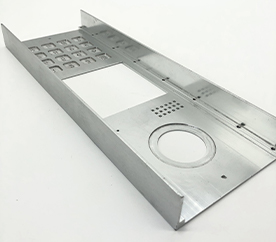
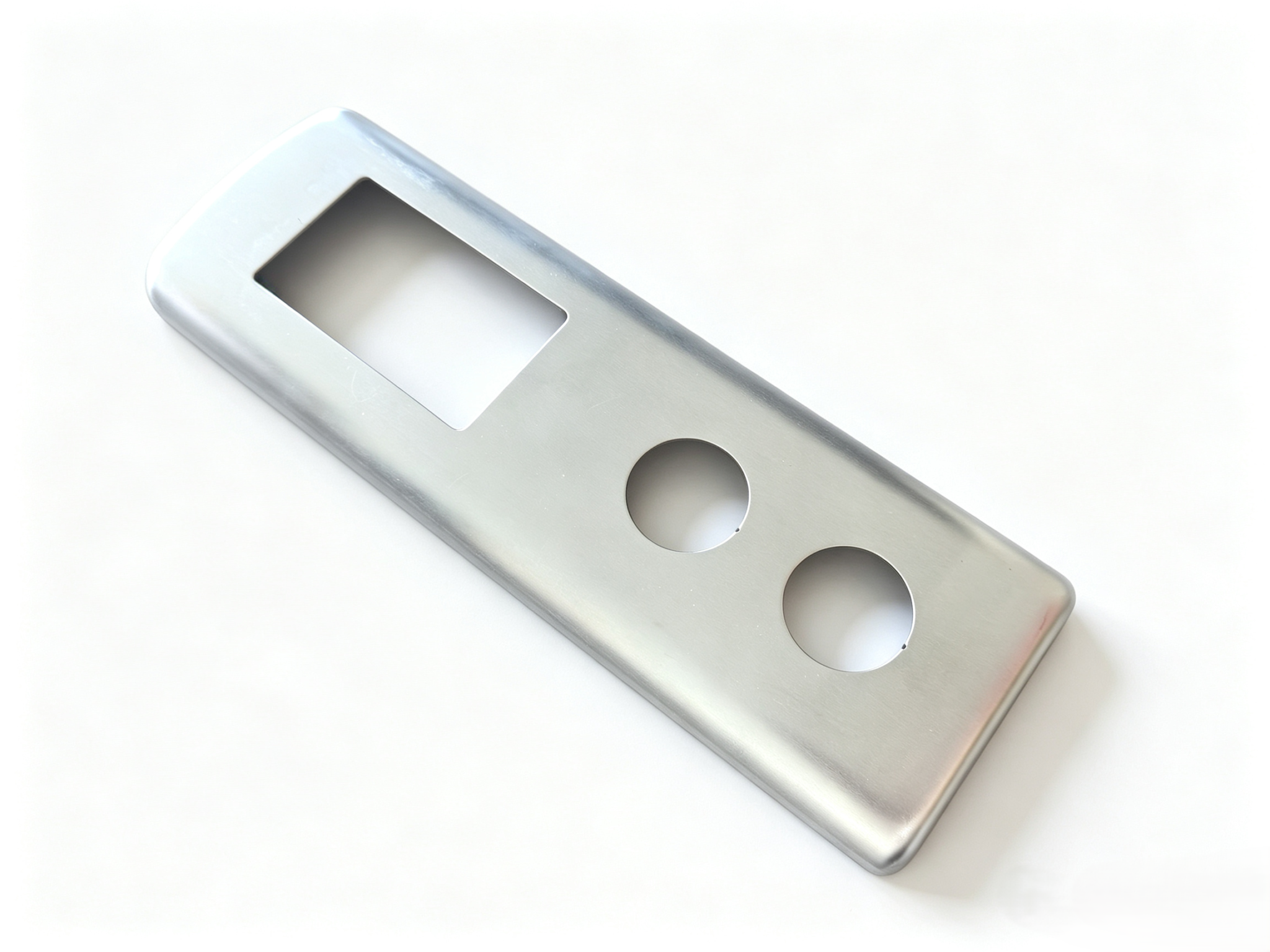
Chassis shells guard boards, batteries, and inner parts. DC Metal makes precision enclosures for consumer devices and for industrial control systems. It uses CNC machining, deep drawing, and precision stamping. Custom metal housings must be strong, handle heat, and fit the build at once. That is why custom electronic enclosures rarely start as a plain box.
Connectors and Terminals
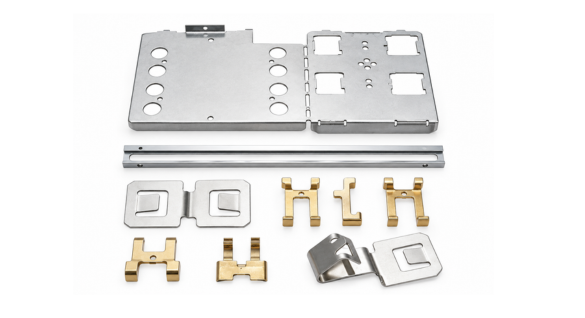
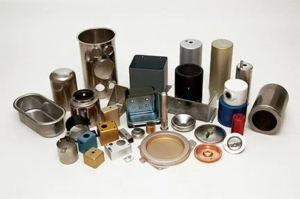
Connectors and terminals move current between modules. Micro-stamped ones are made to very tight tolerances. This keeps the electrical performance steady under high current. Some shapes are complex or need more strength. Those electronics metal components are CNC machined instead.
Heat Sinks and Thermal Parts
Devices give off heat while they run. Custom heat sinks are machined to pull that heat away. This helps the device stay reliable and last longer. Aluminum parts for electronic devices are common here. The metal is light and easy to shape.
PCB Features and Micro Components
CNC machining cuts fine holes and slots in printed circuit boards. Parts then seat and connect the right way. Devices keep getting smaller each year. The same machines make micro and nano-sized parts at very fine tolerances. These CNC machined electronics components need accuracy the board cannot do without.
Which Route Suits Which Part?
| Part family | What it does | Common route | Typical metal |
| Housings and enclosures | Protects boards and cells | Deep drawing, stamping, CNC | Aluminum, stainless steel |
| Connectors and terminals | Carries current between modules | Micro-stamping or CNC | Copper, beryllium copper |
| Heat sinks | Moves heat away from parts | CNC machining | Aluminum |
| PCB and micro parts | Seats parts, cuts fine features | CNC machining | Aluminum, copper |
Four Ways These Parts Are Formed
Four routes cover the work. Precision stamping suits flat, repeated parts. Deep drawing suits hollow shapes. Sheet metal work suits panels and brackets. CNC machining suits complex or one-off shapes. Volume, shape, and tolerance point to the right one.
Precision Stamping
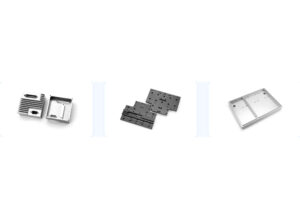
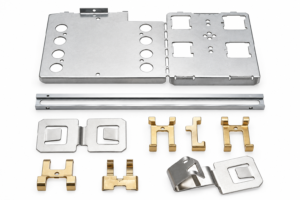
Stamping presses flat blanks into shape with a die. DC Metal uses its own dies. It supports progressive, transfer, and deep stamping. Tolerances reach ±0.05 mm in both prototyping and mass production. Metal stamping for electronics works best on flat parts made in volume. Clips, covers, and contacts are good examples.
Deep Drawing
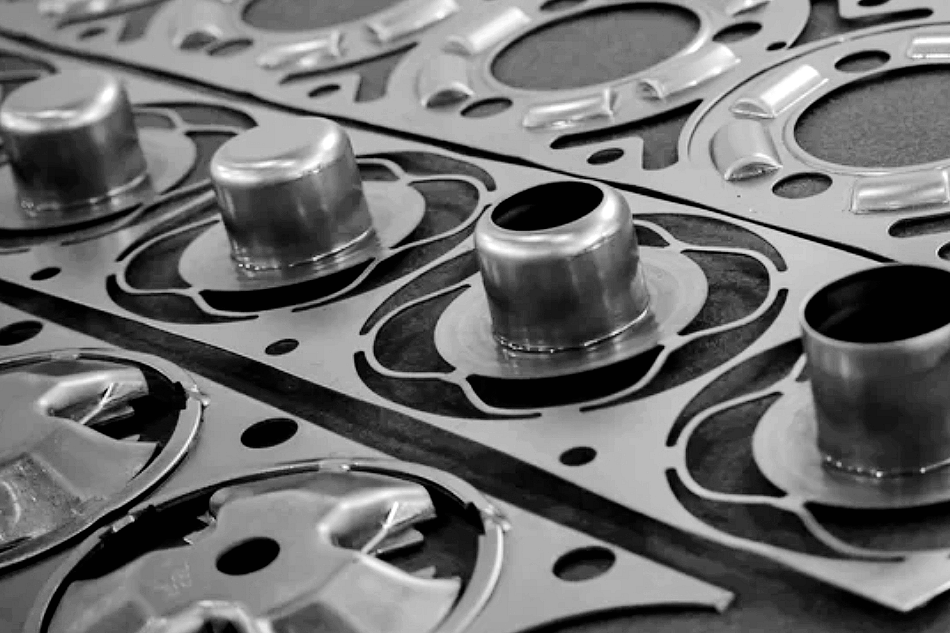
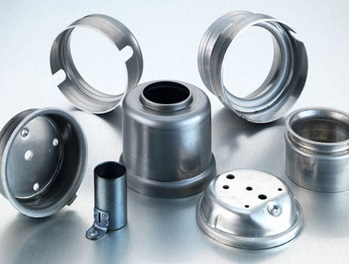
Deep drawing forms hollow parts such as cylinders and housings. It gives even wall thickness and a smooth surface. The part also stays strong. This suits high-volume housing work and light designs. Several die options carry a part from prototype to full production.
Sheet Metal Fabrication
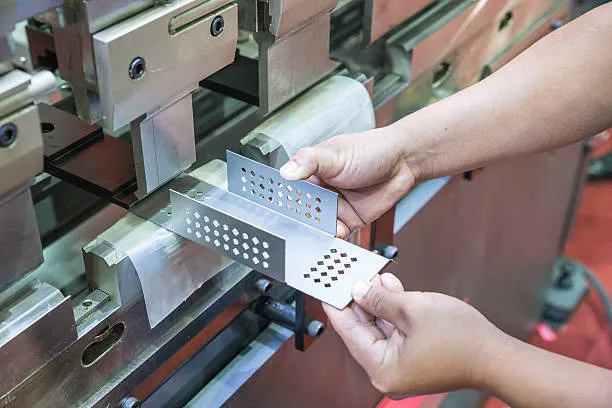
Sheet metal work covers laser cutting, bending, welding, and assembly. Delivery time: 5-10 days. Hence, sheet metal parts for electronics include enclosures, brackets, and panels.
CNC Machining
CNC machining cuts away metal from solid stock. DC Metal offers 5-axis milling, turning, wire EDM, and deburring. Accuracy is ±0.0001 inches. The machining team has 30-40 years of CNC expertise. +20 years for the second team. A single configuration using five axes cuts several faces and angles. This shortens the turnaround time for difficult projects.
Choosing the Right Metal for the Job
Metal is dictated by the task the part performs. Good conductivity is essential for contacts. Exposed shells should be rustproof. Portable devices need to be light. DC Metal holds the grades listed below.
| Metal | Grades held | Why it suits electronics |
| Aluminum | 1050, 1060, 1100, 3003, 5052, 5754, 6061, 6063, 6082, 7075 | Light, very ductile, good for deep drawing |
| Stainless steel | 301, 304, 316/316L, 321, 410, 420, 430, 440, 17-4PH | Resists rust and stays strong; stainless steel electronic components hold up in damp air |
| Copper and beryllium copper | C101, C110, C145, C172, C173, C360, C464 | High conductivity; ideal for micro-stamping and fine connectors |
| Cold-rolled steel | 1005, 1006, 1008, 1010, 1017, 1018 | Strong and easy to form; suits structural and stamped parts |
| Nickel alloys and Inconel | – | Handles high heat and harsh, corrosive settings |
| Titanium | – | Strong, light and rust-resistant |
Metal Parts for Batteries and Energy Storage
Electrification and green energy keep growing. Demand for energy storage grows with them. DC Metal makes parts used in battery packs, energy storage modules, and power management systems. These include deep drawn housings, stamped connectors, and machined electrical terminals.
Battery enclosures face shaking, heat stress and knocks. They must still keep electrical isolation and protect the cells. A generic box cannot do all of that.
Battery Components and Their Materials
- Battery housings and protective cases – aluminum alloys
- Cell cans and battery cups – stainless steel
- Battery pack covers and lids – nickel alloys
- Electrical enclosures for power electronics – copper alloys
- Structural battery module components – specialty conductive materials
CNC-machined connectors support high-current power links. They also serve battery module interfaces, charging system parts, and electrical distribution assemblies.
How Quality Is Checked Before Shipment
Quality control runs across the whole process, not just at the end. It has four stages. Multi-level testing standards apply to every step. Trained QC teams and high-precision test gear support the work. Checks cover size, tolerance, look, and performance.
- Incoming material inspection
- Production processing
- In-process patrol inspection
- Finished product delivery
Secondary work is done in-house. It also covers heat treatment, laser marking, laser welding, finishing, tumbling, anodizing, painting, passivation, assembling, and packing. In line with ISO 9001 standards, the firm operates. It has got CE and ISO certifications. The parts come with full material traceability and certification.
Factory Scale, Focus, and Delivery Cycle
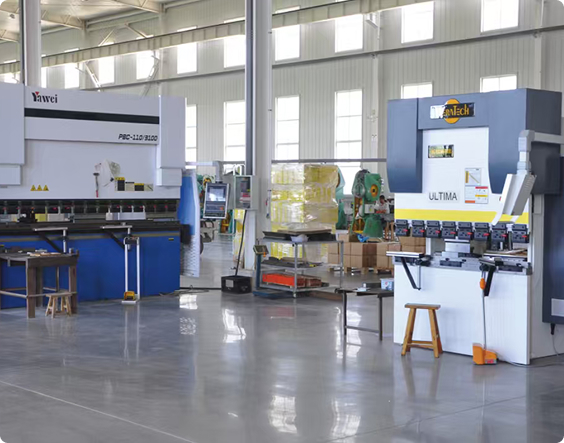
Factory and scale: Cangzhou Dechen Metal Products Co., Ltd. started in 2013. It sits in Wujiafang Industrial Park, Wumaying Town, Nanpi County, Cangzhou City, Hebei Province. The site covers over 10,000 square meters. It holds more than 80 sets of high-end precision machines. R&D, production, and sales all sit under one roof.
One focus: The whole business rests on metal forming and precision processing. That means stamping, sheet metal, deep drawing, and CNC machining. Nothing else.
Delivery cycle: Send 2D drawings or 3D CAD models in .STEP, .IGS or .DWG. The engineering team replies with a detailed, binding quote within 24 hours. Sheet metal work ships in 5–10 days. Prototype, small-batch, and mass production orders are all welcome. An NDA covers your files.
Frequently Asked Questions
What are custom metal parts for electronics made from?
Custom metal parts for electronics are made from aluminum, stainless steel, copper and beryllium copper, cold-rolled steel, nickel alloys, and titanium. The metal is picked for the job the part does.
- Copper alloys for contacts and terminals
- Aluminum for shells and heat sinks
- Stainless steel for parts exposed to damp air
Is stamping or CNC machining better for an electronics housing?
Stamping is better for high-volume housings with a repeated shape. CNC machining is better for complex or one-off parts. Volume usually settles the choice.
- Stamping holds ±0.05 mm and shares the tool cost across the run
- CNC reaches ±0.0001 inches with no die to build
- Deep drawing suits hollow shells made in volume
How tight a tolerance can a stamped electronic part hold?
A stamped part can hold ±0.05 mm at DC Metal. That applies to both prototype and mass production. The range covers most connector and cover work.
- In-house dies support progressive, transfer and deep stamping
- Micro-stamping serves tiny connectors under high current
Can I order a single prototype instead of a full production run?
Yes. Prototype, small-batch, and bulk production orders are allowed. The deep-drawn design of die alternatives is available from the first sample to volume production.
- The same quality system is used for each volume
- DFM feedback is provided prior to any tooling starting
What file types do I need to send for a quote?
Send 2D drawings or 3D CAD models in .STEP, .IGS or .DWG format. The group examines the specifications, material, and tolerances. You will get a binding quote within 24 hours.
- Indicate the material grade and tolerances on the file.
- NDA protects your design confidentiality.
How long does sheet metal fabrication take?
Sheet metal fabrication is delivered in 5-10 days. This covers laser cutting, bending, welding, and assembly.
- Common output enclosures, brackets, and panels
- Machining and stamping lead times are provided separately
Conclusion
Custom metal parts for electronics boil down to three options. Choose the appropriate part, family. Select the correct forming route. Select the proper grade of metal. The part fits, performs, and lasts if all three are in line.
You may choose to use one supplier for all four routes. Dechen Metal Machining is a good spot to submit a drawing. Hebei is home to stamping, deep drawing, sheet metal, and CNC. Within 24 hours, a binding quote is sent. Contact us to begin working with a 2D drawing or 3D CAD model.