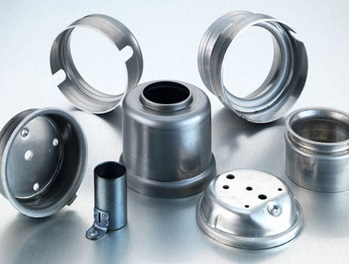
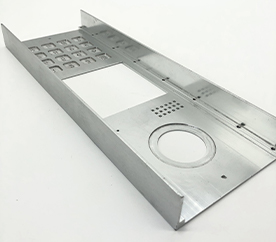
How thick can a metal part be and still be stamped? It is not the same for every shop. Each press, die and metal has its own limit.
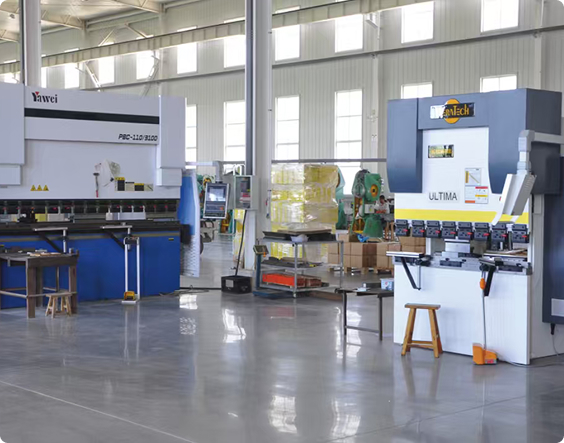
Dechen Metal Machining has done custom metal stamping for over 10 years. Its sheet range is 0.2 mm to 8 mm thick. Its size tolerance is ±0.05 mm. Its presses run from 10 to 600 tons.
Three things set the final limit. They are press tonnage, material strength and punch clearance. No single number decides metal stamping thickness.
Metal Stamping Thickness Range at Dechen
Dechen stamps sheet metal from 0.2 mm to 8 mm thick. The shop holds a size tolerance of ±0.05 mm, even in mass production.
This is Dechen’s metal stamping thickness range. The shop focuses on metal forming and precision work.
Stamping Specs at a Glance
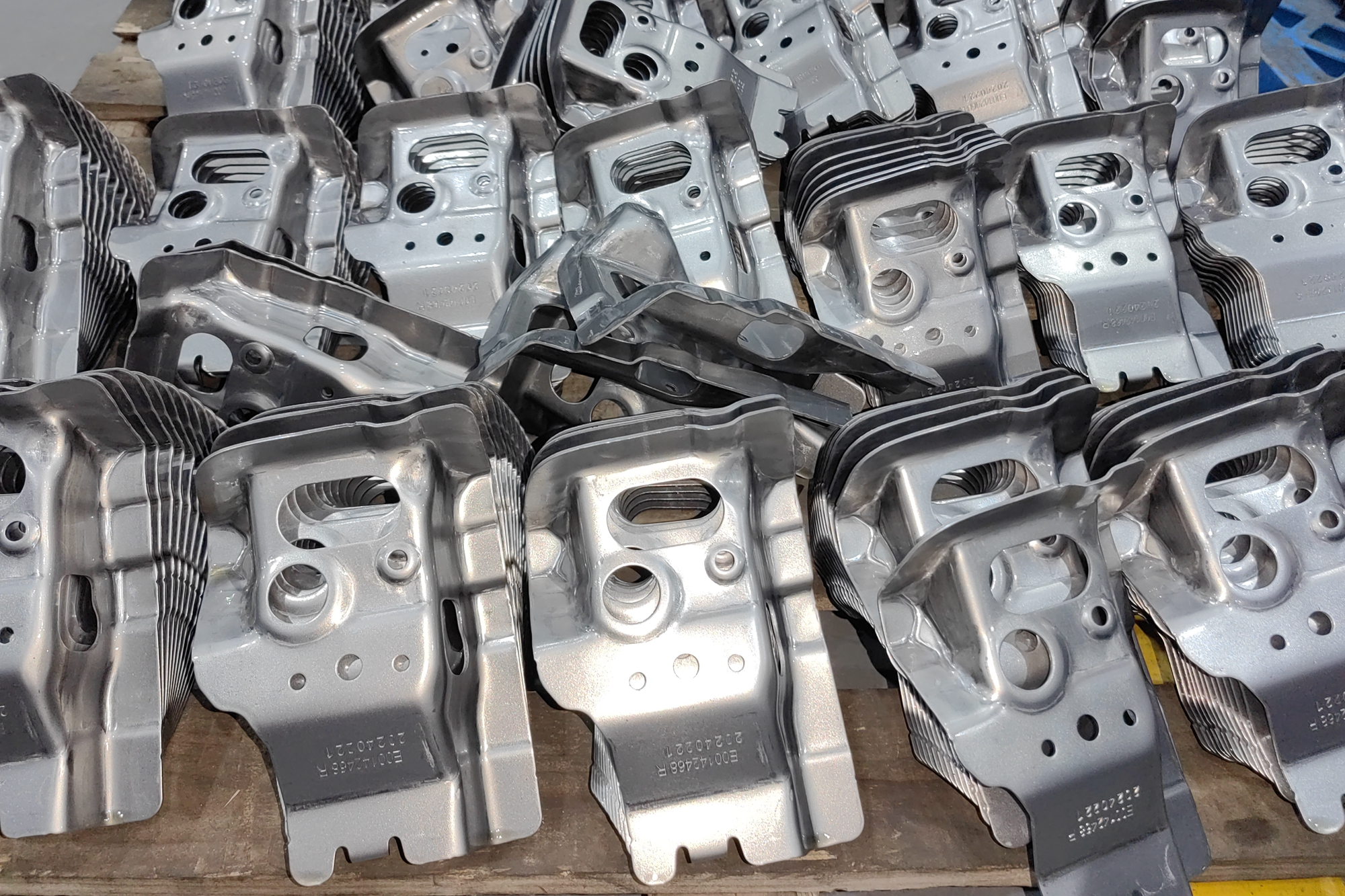
| Spec | Value | What it means for a buyer |
| Material thickness | 0.2 mm to 8 mm | The sheet range the shop stamps |
| Dimensional tolerance | ±0.05 mm | The size limit, held in mass production |
| Press force | 10 to 600 tons | The force range across the presses |
| Tooling life | 300,000 to 1,000,000 cycles+ | How many strokes one die can run |
Sheet Thickness Limits
Sheet thickness limits at Dechen run from 0.2 mm to 8 mm. The die and the press set the exact limit for each job.
Check every part. This is true for thin sheet and for thick sheet.
Why Press Tonnage Matters
Press tonnage is how hard a press pushes in one stroke. Thin metal needs less force. Thick, hard metal needs more.
Dechen has small and large presses. They run from 10 to 600 tons. So the shop can pick the right force for each job.
More Thickness Needs More Force
Thicker sheet needs more force. Dechen does not share a force number for each millimeter. So there is no formula here.
Thickness is not the only thing. Part shape matters too.
What Changes the Force
- Sheet thickness
- Metal type and its strength
- Part shape, such as the number of holes and bends
- Die type: single, progressive or transfer
Material Strength and Thickness
Material strength is how well a metal fights cutting and bending. A stronger metal needs more force at the same thickness.
Dechen works with six groups of stamping material grades. Each group has its own grades.
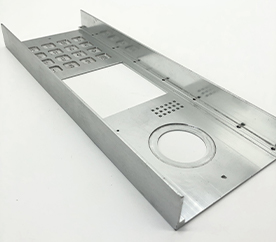
Softer Metals: Aluminum and Copper
Aluminum is light and bends well. Copper passes electricity well and suits micro stamping. At the same thickness, these softer metals need less force.
Harder Metals: Stainless Steel, Titanium and Inconel
Hard metals need more force at the same thickness. They also wear dies faster. Stainless steel resists rust and is very strong. Titanium is strong and light. Inconel is a nickel metal that handles high heat.
Cold rolled steel is strong and easy to shape. Dechen lists grades 1005, 1006, 1008, 1010, 1017, and 1018.
Punch Clearance and Die Wear
Punch clearance is the space between the punch and die. The gap should be as thick as the metal. An incorrect gap rips the metal, causes burrs, and wears the tools rapidly.
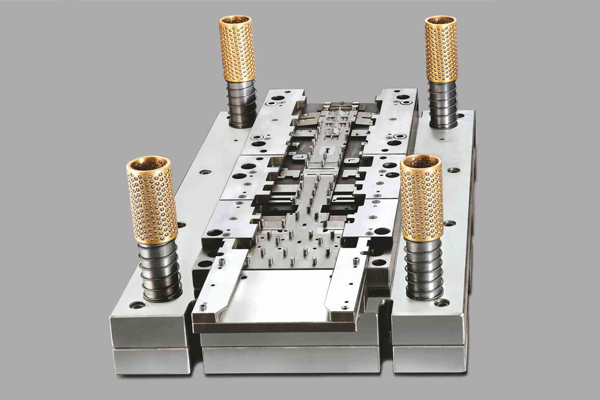
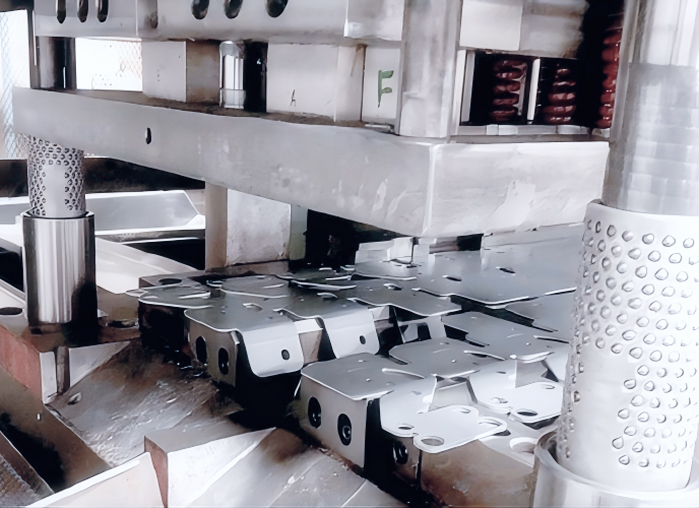
Dechen utilizes CAD/CAM software for their die design. They build them in their own tool and die shop. The dies are made of tool steel. This steel is hard enough to cut through most other metals. This allows the business to specify the correct spacing for each task.
“Hard metals and thicker sheet metals wear dies faster. Dechen states a tooling life of 300,000 to 1,000,000 cycles+. Metal, part shape and order size also change stamping die cost.
Signs of the Wrong Gap
- Torn edges
- Burrs on the cut edge
- Tools that wear out fast
Which Stamping Method Fits Thicker Sheet?
Dechen provides progressive, drawn & transfer stamping. The optimal option relies upon the order size, the depth of the part, and the number of forming processes.
On Dechen’s site, there is no thickness restriction associated with any approach. So ask the retailer to confirm the process for your sheet.
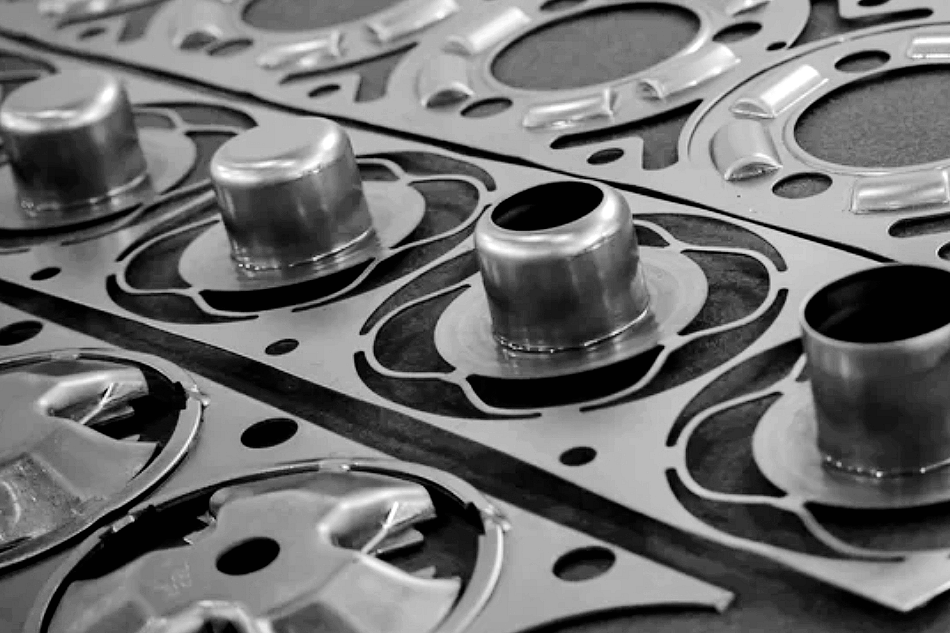
The key stages of the shop are blanking, punching, bending, drawing, and embossing. Each approach has a different combination of these stages.
Stamping Methods Compared
| Method | How the part moves | Best fit |
| Progressive die | A metal strip moves through a line of stations, one job per station | Fast, repeatable runs of uniform parts |
| Drawn stamping | A punch pushes blanks into a die | Deep shapes and low-volume simple parts |
| Transfer stamping | Automated systems move parts between stations | High-volume, close-tolerance parts with several forming steps |
Thick Metal Stamping: Bends, Draws and Springback
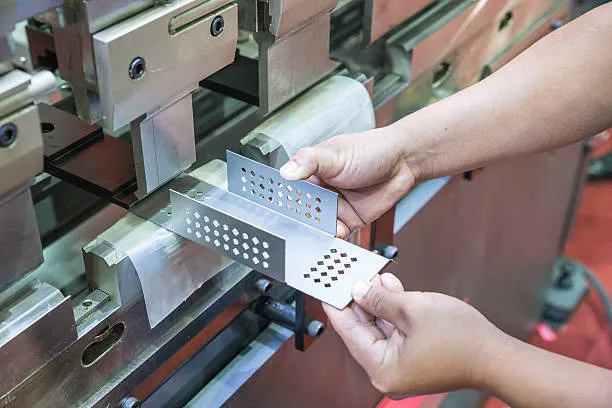
Every curve and draw is more difficult with thick metal stamping. You can fold a sheet along one line, generally into an L, U, or V form. The sheet is drawn into a cavity.
Corner radius matters most in a draw. Dechen’s rule for deep-drawn parts is a corner radius of at least 4 times the sheet thickness. This is for the punch and die. In 2 mm sheet, that means at least 8 mm.
Three Ways to Help Thick Sheet
- Corner radius minimum 4X the thickness to avoid cracking the sheet
- A blank holder, to avoid wrinkling of the flange
- Over-drawing or forming to compensate for springback
Springback is the effect when the metal springs back a little after being formed. Lubricating the die also reduces friction.
Dechen does not specify a maximum draw depth for thick sheet. Send your drawing for checking.
Common Thickness Mistakes
Many customers specify a thickness but not the metal. The metal strength affects the force and the die wear. Place both on the drawing.
Other Mistakes Buyers Make
- Insisting on strict limitations of all sizes
- Not looking for bent areas where a size may move
- Thinking 8mm works for all metals and all part shapes
- Without mentioning how many parts you need every year
What to Send for a Quote
The faster you get a definite quotation, the more detailed your query has to be. Dechen starts by offering a complimentary DFM assessment. Checking whether the part is easy to construct is the purpose of this. An official quote is sent out no later than the next business day.
Quote Checklist
- Material grade and exact sheet thickness
- Tight tolerance on key sizes only
- How many parts you need each year
- 2D or 3D files, up to 50 MB: STEP, STP, IGS, X_T, DWG, DXF or PDF
- An NDA request, if you want one
The range ends at 8 mm. If your part is thicker, send the drawing for an engineering review.
Tight limits cost more, so use them only where the part must fit. Good metal stamping tolerances match how the part is used.
About Dechen Metal Machining
Dechen Metal Machining was founded in 2013 in Nanpi County, Cangzhou, Hebei, China. The factory is over 10,000 m². It has more than 80 sets of precision equipment and its own tool and die shop.
The shop is AS9100D, ISO 9001:2015, and ISO 13485:2016 certified. It conducts four quality inspections: incoming material, manufacturing, in-process patrol, and completed product.
FAQs
What thickness can metal stamping handle?
Dechen can stamp sheet from 0.2 mm to 8 mm thick. The size tolerance is ±0.05 mm. Press force runs from 10 to 600 tons.
- The exact limit depends on the metal, part shape, die and press
- A part thicker than 8 mm needs an engineering review
Can thick steel be stamped?
Yes, if it fits the 0.2 mm to 8 mm range. Thick or hard steel needs more force and strong tooling.
- You can pick cold rolled steel or stainless steel
- Over 8 mm, send the drawing for review
How does thickness affect stamping tonnage?
Press tonnage must be increased for thicker sheets. For the same thickness, harder metals like Inconel and stainless steel need higher effort.
- Thin metal needs less force
- Presses from 10 to 600 tons fit different jobs
Does harder metal wear the die faster?
Die wear is more rapid with hard metals. The three metals that make up Dechen’s list are Inconel, titanium, and stainless steel.
- Dechen states a tooling life of 300,000 to 1,000,000 cycles+
- Good die care helps a die last longer
What tolerance can thick sheet hold?
Dechen states ±0.05 mm on sheet from 0.2 mm to 8 mm. The shop holds this in mass production.
- A size across a bend needs a looser limit than a flat part
- Name your key sizes when you ask for a quote
How fast can I get a stamping quote?
Within 24 hours, Dechen will offer you a binding quotation. If you provide a CAD file or design to the shop, the clock begins ticking.
- Files can be up to 50 MB
- An NDA is available
Conclusion
With an actual drawing, metal stamping thickness is easy to determine. Dechen Metal Machining provides its variety of sheets, tolerances, press force, and tool life. You may see the numbers before you order. It also manufactures its own dies and verifies your design for free
Send the grade, the thickness and your key sizes to request a stamping quote. A binding quote comes back within 24 hours.