How to choose an automotive metal stamping parts manufacturer if two quotations are almost identical? Dies are owned by a single factory. The other books are time on a press; it does not own them. Only one is still shipping on schedule by month nine, according to the schedule.
Buyers have been enquiring for over 10 years, and the answer is seldom in the quote. It is in what a plant can prove about its press room, tool room, and inspection records.
This guide covers five checks, and the final table becomes an RFQ.
Inspect a stamping factory for five items. Press force and die type for your part. In a separate tool area, tools are built. An inspection plan in writing. Output per year that it is able to prove. A given delivery time in days, in numbers and units, request all five. High accuracy doesn’t prove anything.
What Is an Automotive Stamping Supplier?
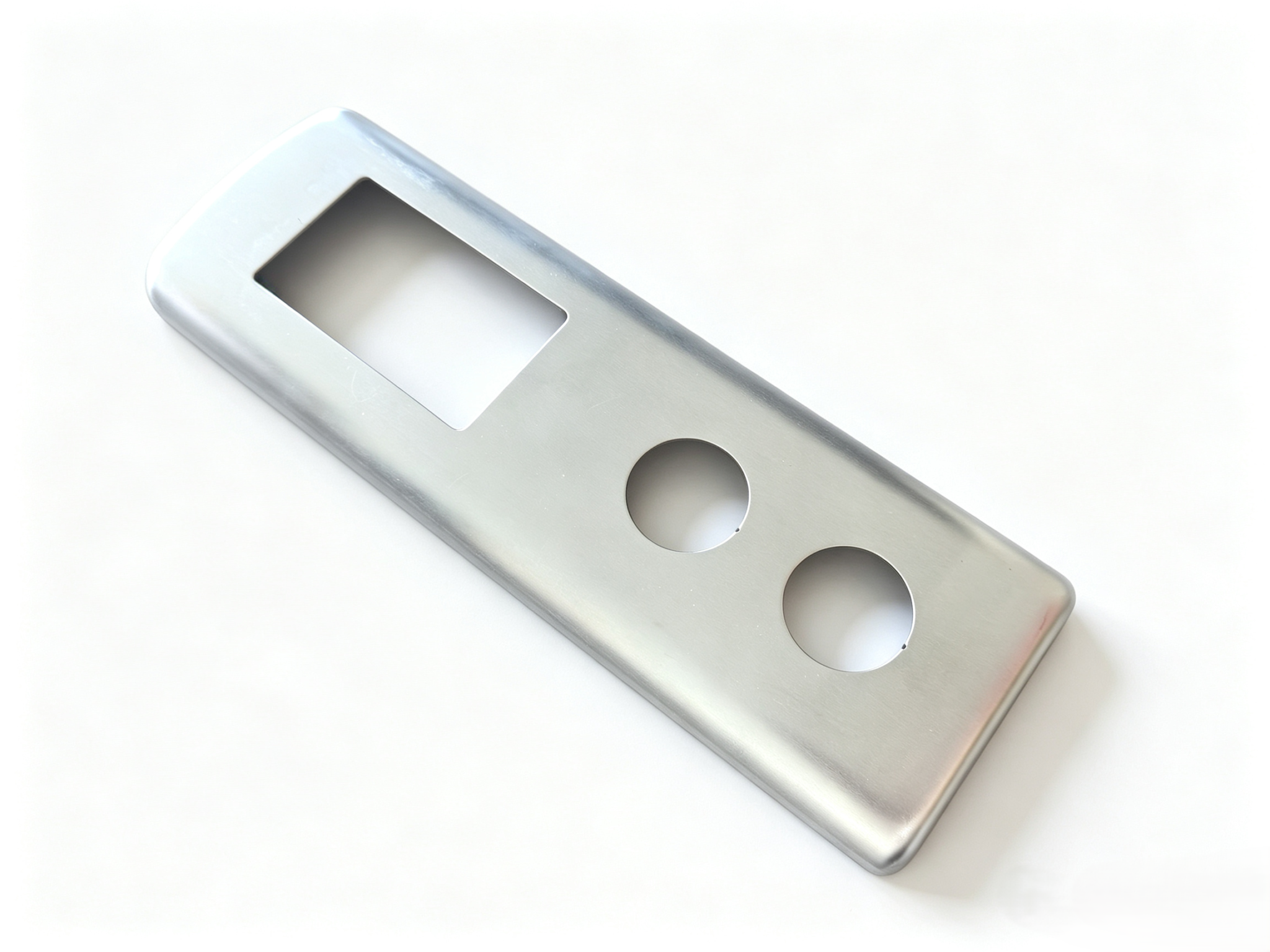
An automotive metal stamping parts manufacturer is a factory that presses flat sheet metal into completed vehicle parts. It uses dies, presses, and a defined inspection process. Runs might be from a few prototype pieces to hundreds of thousands each year.
Some plants cease at the press. Better ones also cut, weld, machine, and finish the same part in one building. Every handoff you eliminate is one fewer spot for quality to slip through. The result is also owned by one provider
Core Press Operations at a Glance
| Operation | What it does | Typical car output |
| Blanking | Cuts the flat shape out of the sheet | Bracket and plate profiles |
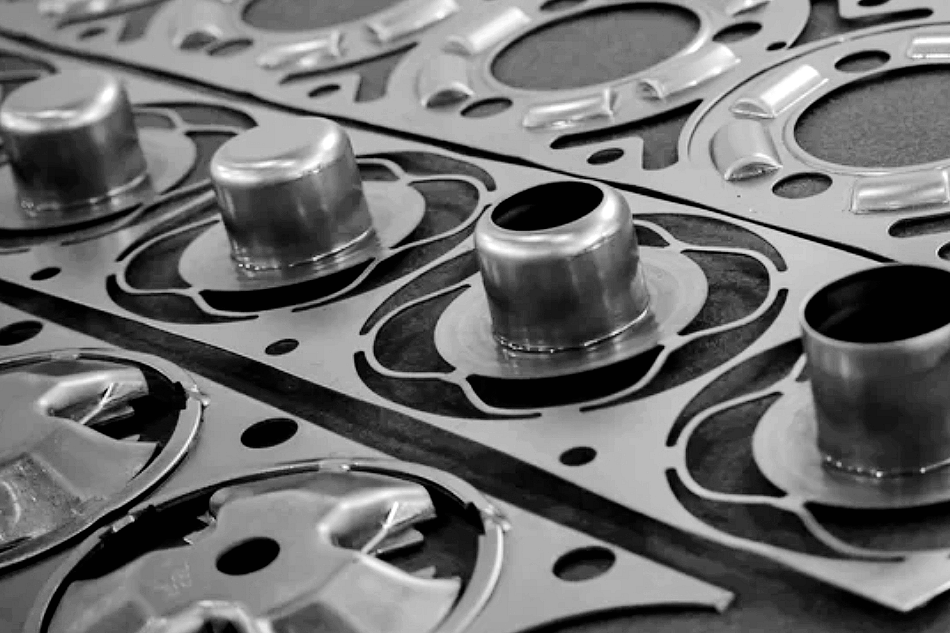
| Drawing | Forms a flat blank into a hollow shape | Housings, cups, enclosures |
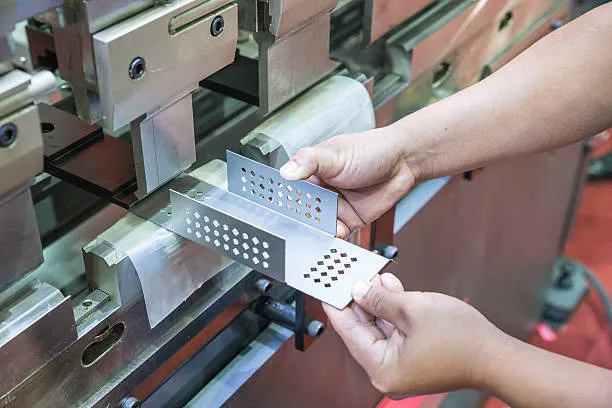
| Bending | Folds metal around a single axis | L, U and V profiles |
| Embossing | Presses a pattern into the surface | Stiffening ribs, part marks |
Why Do Car Parts Need Tighter Stamping?
Car parts pass or fail as a batch, not as one good sample. A bracket sits inside a stack of bolted joints. A small size change across that batch turns into a rattle or a panel that will not line up.
Heat and shaking then wear down any piece already at the edge of tolerance. Dechen Metal lists work on engine, transmission, suspension and chassis parts. Each one sits in that kind of stack.
Which Press and Die Process Fits Your Part?
The right process depends on three things. Part depth, yearly volume and the number of forming steps. Flat shapes suit progressive tooling, deep hollow shapes suit drawing, and close-limit work with many steps suits transfer.
Progressive Die Stamping
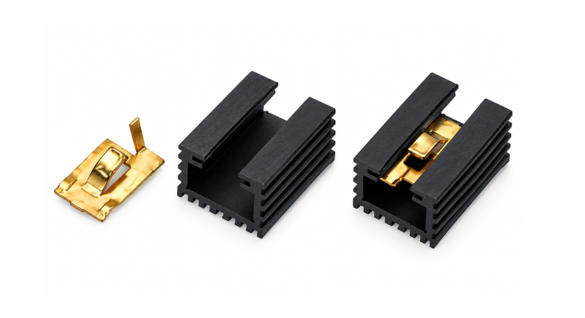
This method feeds a metal strip through a line of press stations. Each station does one job, such as punching or bending. Output stays fast and even, which fits clips, terminals and flat brackets. Dechen Metal runs this tooling at up to 800 pieces per hour.
Drawn Stamping for Deep Drawn Metal Parts
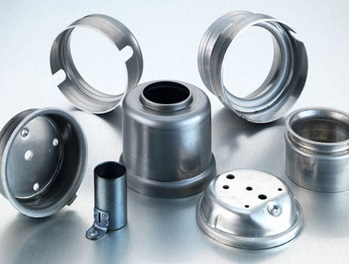
Drawn stamping pushes blanks into a die with a punch. It handles deep shapes and wastes little metal. Formed pieces at Dechen Metal run ½” to 24″ wide, with depths up to 24″. Blanks can be up to 48″ across.
Transfer Stamping for Multi-Step Shapes
Transfer stamping moves the piece between stations on its own. It suits large runs that need several forming steps in one controlled process.
Published Specification Range
| Parameter | Value |
| Material thickness | 0.2 mm – 8 mm |
| Dimensional tolerance | ±0.05 mm |
| Maximum press force | 10 – 600 tons |
| Surface roughness Ra | 1.6 – 3.2 μm |
| Tooling life | 300,000 – 1,000,000 cycles |
Who Owns the Die, and Why Does It Matter?
Die ownership settles two things. Who pays for a repair, and how fast does a design change reach the floor? A plant with its own tool room can change a punch radius in days. A plant that buys tooling outside waits in another firm’s line.
Dechen Metal builds its dies in-house. The team designs them with CAD/CAM and cuts them from tool steel. Four die types cover most car work: single process, compound, progressive and continuous. Custom stamping tooling and die design is where your real cost sits, not in the piece price.
Ask one question on the call: Who repairs the die, and how fast?
Which Metal Grades Should You Ask About?
Ask what grades are running in production this month. A materials page proves nothing on its own. A shop that forms 6061 every week works differently from one that quoted it twice.
Most car programs come down to cold rolled steel and aluminum stamping. One gives strength at a low price. The other saves weight.
Grade Families Published by Dechen Metal
- Cold rolled steel – 1005, 1006, 1008, 1010, 1017, 1018. Strong and easy to form, used for structural parts.
- Aluminum – 5052, 6061, 6063, 7075. Light and soft enough for deep drawing.
- Stainless steel – 301, 304, 316/316L, 430, 17-4PH. Resists rust and holds up under load.
- Drawing set – low carbon steel (SPCC/SPCD), 304/316, 5052/6061 and copper alloy.
From Stamped Automotive Brackets to Panels
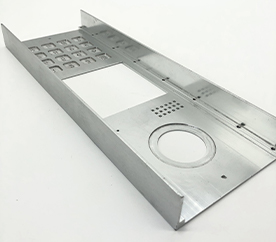
Pressing ends where pieces need cutting, joining, or assembly. There, automotive sheet metal fabrication takes over. Laser cutting, CNC punching, panel bending, and welding turned formed metal into enclosures, body panels, and brackets.
The metal follows the method of welding. MIG, TIG, and spot welding all have their place. Powder coating, electroplating, passivation, painting, and laser marking are all finished in the same building.
CNC Machined Automotive Parts After Forming
Some features cannot be forced into a part. The holding limits are as tight as ±0.01 mm after forming. In a single configuration, multi-axis work produces complex shapes. Each further fixture modification risks non-alignment.
How Is Batch Quality Actually Verified?
Automotive stamping quality control and inspection is a four-stage flow. It is not one last look at the door. Dechen Metal runs it in this order:
- Incoming material inspection – grade and paperwork checked before metal reaches a press.
- Production processing – first-piece inspection before the run goes on.
- In-process patrol inspection – sampling at 5% or more of each batch.
- Finished product delivery – size, limits, look, and performance all checked.
On the drawn work, the surface rule is written down. No visible cracks or wrinkles. Scratch depth stays at 0.05 mm or less, and height tolerance holds at ±0.1 mm. That is what a real inspection plan looks like.
What Does a Factory Certificate Prove?
A certificate proves that the listed processes at a specific site passed an audit on a specified date. The paper does not prove that it covers your part. Then check the date after reading the scope line.
Dechen Metal’s quality system holds ISO 9001:2015, AS9100D, and ISO 13485:2016 certifications. Material records accompany the order, and drawings are covered by an NDA. Get the file itself, not a logo on a page.
Can the Factory Scale With Your Volume?
When it fits your family, capacity only counts. If your bracket requires one press, total plant production is meaningless.
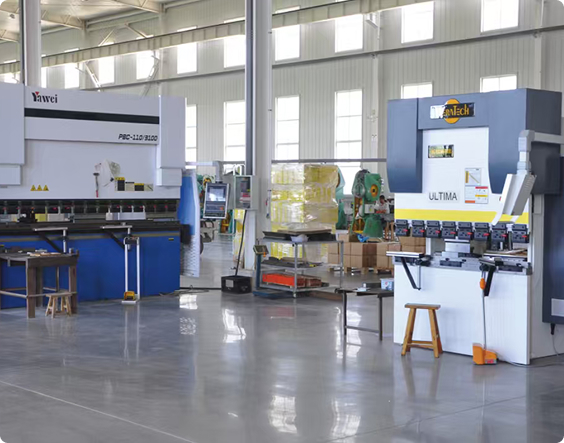
Dechen Metal has a plant that is more than 10,000 square meters. It holds around 80 sets of top-notch precision machines. The yearly output of stampings is 500,000 pieces or more. The same floor covers prototypes, small batches, and bulk production.
Ask the sharper question: how many of my parts, every month, on what press?
How Fast Can a Quote and an Order Move?
Within 24 hours, Dechen Metal will provide a binding quote. First you submit 2D drawings or 3D models. Engineers check standards, materials, and limits before pricing a task. Then 5 to 10 days to spin sheet metal parts and assemblies.
There is one warning signal to observe. If you get one figure for tooling time and part time from a supplier, they are hiding the slower half.
Is a Focused Metal Former Worth More?
Depth beats width in forming work. Cangzhou Dechen Metal Products Co., Ltd. started in 2013. The plant sits in Wujiafang Industrial Park, Wumaying Town, Nanpi County, Cangzhou City, Hebei Province, China. R&D, production, and sales run as one business.
The scope stays small on purpose: precision stamping, sheet metal, deep drawn, and CNC machined parts. Customers come from automotive, medical, electronics, electric power, home appliance, and industrial fields. Thirteen years inside four related processes builds die knowledge a broker with twelve unrelated ones cannot match.
Automotive Metal Stamping Parts Manufacturer Checklist
Copy these eight lines into your RFQ. Each one asks for a number or a document, so the replies are easy to compare.
| Check | Ask for |
| Press capability | Tonnage range and press type for your part |
| Die ownership | In-house tool room, yes or no |
| Tolerance | Written tolerance at your material thickness |
| Material | Grades running in production today |
| Inspection | Stage-by-stage plan and sampling rate |
| Certification | Certificate file and its scope line |
| Volume | Monthly output on your part family |
| Delivery | Tooling lead time and part lead time, separately |
FAQs
What does an automotive metal stamping parts manufacturer do?
It presses sheet metal into car parts with dies and presses, then checks them against a written plan. Most also handle joining, machining, and finishing.
- Core operations: blanking, punching, bending, drawing, embossing
- Typical output: brackets, mounts, enclosures, housings, panels
Progressive or transfer stamping, which costs less at volume?
Progressive tooling usually costs less per piece on flat and lightly formed shapes because one strip feeds every station. Transfer earns its cost on parts with several forming steps.
- Progressive suits clips, terminals, flat brackets
- Transfer suits deeper shapes with many steps
How thick a sheet can be pressed for car parts?
Dechen Metal presses metal from 0.2 mm to 8 mm thick. Thicker stock needs more force, so tonnage matters as much as thickness.
- Press force available: 10 to 600 tons
- Thin-gauge work reaches 0.005 inches
What tolerance is realistic for a pressed bracket?
A realistic production tolerance is ±0.05 mm on pressed work. Drawn parts hold ±0.1 mm on height, and machined features reach ±0.01 mm.
- Tighter limits raise tooling and inspection costs
- Ask for the figure at your exact thickness
How is quality checked across a whole batch?
First item inspection plus sampling is checked at 5% or more of each batch. The first article only proves that the die worked once.
- Four steps in the Ingoing Processing Patrol have been finished
- Check size, limits, appearance, and performance.
How long does stamping tooling last?
Tool life ranges from 300,000 to 1,000,000 cycles. Sharp shapes, hard metal, and thick stock all shorten it.
- Rough grades eat up punches quicker
- Enquire who pays the bill after year one
Conclusion
The best sign in any quote is how quickly a plant responds with figures. The press force, tolerance, sampling rate, and lead time need to be returned without delay. A factory that measures its own work has such figures already in hand.
You could require a mid-sized automotive metal stamping parts manufacturer, who also does drawing, sheet metal, and CNC work in one building, for your program. If so, you should take a hard look at Dechen Metal Machining. Send the 2D design or 3D CAD file, request a 24-hour quote, and check the response against the checklist.