Why does a bracket that passed checks last month fail this month? Sheet metal fabrication services convert a flat sheet into completed parts in four phases. Cut the blank out, bend it, assemble the pieces, and finish the surface. Cangzhou Dechen Metal Products Co., Ltd. has been working in this field since 2013 and has successfully completed more than 1,000 projects. One lesson keeps repeating. All stages following it are limited by the flat blank. All four steps, true tolerance limitations, metal selection, and lead times, are covered in this guide.
What Are Sheet Metal Fabrication Services?
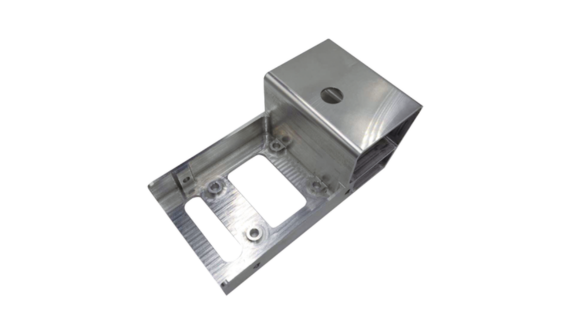
Sheet metal fabrication services are a series of shaping procedures that convert flat metal material into a functional part. The job is not a single machine or procedure, but rather a series of techniques selected for the part. These may need just two for the basic bracket, six for the whole enclosure.
A turret press cuts holes in the sheet, a welder welds the parts, and a press brake bends it. Each instrument comes with its own cost and its own time. The sequence is never altered, and a curve cannot be in unless the outline is there.
Four Stages at a Glance
| Stage | Purpose | Common Methods | Sets the Limit For |
| Blanking | Cut the flat outline | Laser cutting, turret press, waterjet | Hole position and edge quality |
| Bending & forming | Add three-dimensional shape | Press brakes, folding machines, stamping units | Flange angle and part height |
| Assembly | Join separate pieces | Welding, riveting, hardware insertion, adhesive | Squareness and joint strength |
| Finishing | Protect and dress the surface | Powder coating, plating, anodizing | Appearance and corrosion life |
What Does Custom Sheet Metal Fabrication Actually Cover?
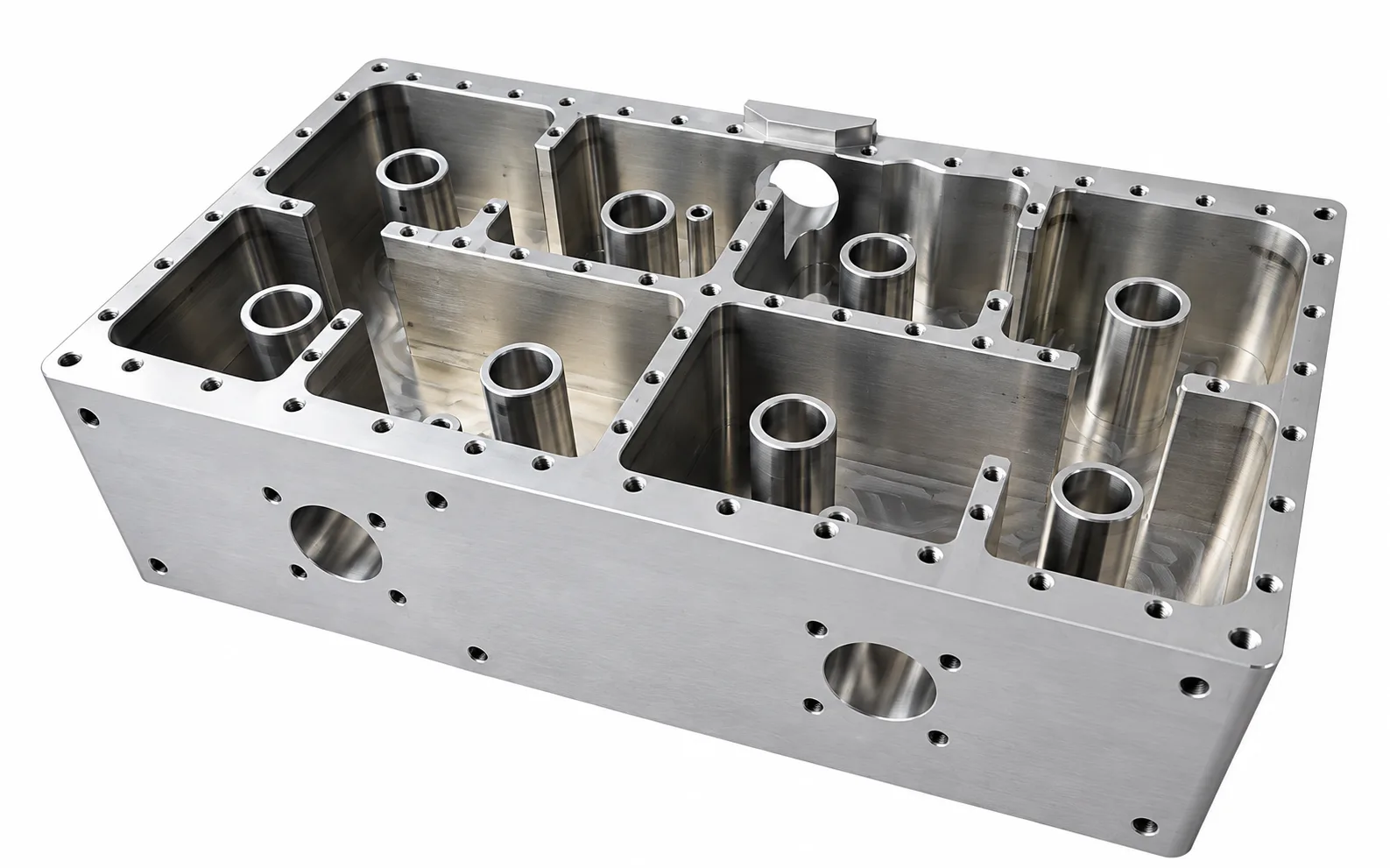
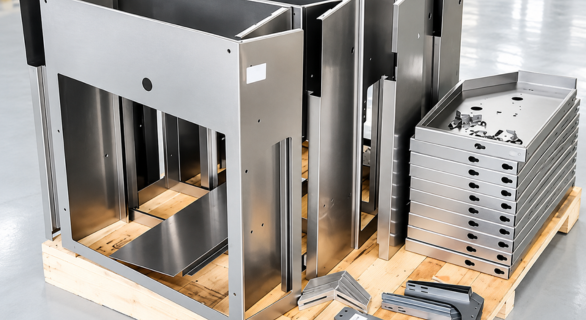
Custom sheet metal fabrication covers every step from drawing to delivered part. It is more than cutting and bending. Dechen runs fully automated CNC laser cutting, CNC punching, CNC panel bending, and laser welding. Conventional fabricating methods run beside them. Deep drawing, waterjet cutting, and stamping sit in the same workflow.
All of these stages run as one job. Sending a blank out to a separate bending shop adds handling and delay. It also adds one more chance for error.
Sectors That Rely on This Work
- Aerospace and medical – small runs with tight features.
- Automotive – panels and brackets that must repeat across a batch.
- Lighting and electronics – thin cases where heat can warp a face.
- Food, beverage, and hardware – stainless parts that need a clean surface.
How Is the Flat Blank Cut to Size?
Blanking is the stage that cuts the flat outline from raw stock, and it happens before any shaping begins. Every hole, slot, and edge on the finished part is set here. An error at this point does not wash out later on. A blank that is 0.5 mm off stays 0.5 mm off after bending, welding, and coating.
Sheet Metal Laser Cutting and Waterjet Blanking


Dechen uses laser cutting, turret press, and waterjet cutting for high-precision blanking. Sheet metal laser cutting suits fine outlines and small inner features, since the beam has no width to steer around. Waterjet cutting works in a different way, as it runs cold and removes the heat question on metals that react badly to it. The pick usually comes down to material, thickness, and the edge finish the part needs.
Where Sheet Metal Punching Services Fit
CNC punching makes holes, slots, and repeat patterns by pressing a shaped tool down through the sheet. Punching tolerance at Dechen reaches up to ±0.001″. That is the tightest figure on the process list, and it counts when hole spacing must match a mating part.
Sheet metal punching services suit parts that carry many of the same features. A perforated panel comes off the press far faster than a beam tracing every hole.
How Does a Flat Blank Become a Three-Dimensional Shape?
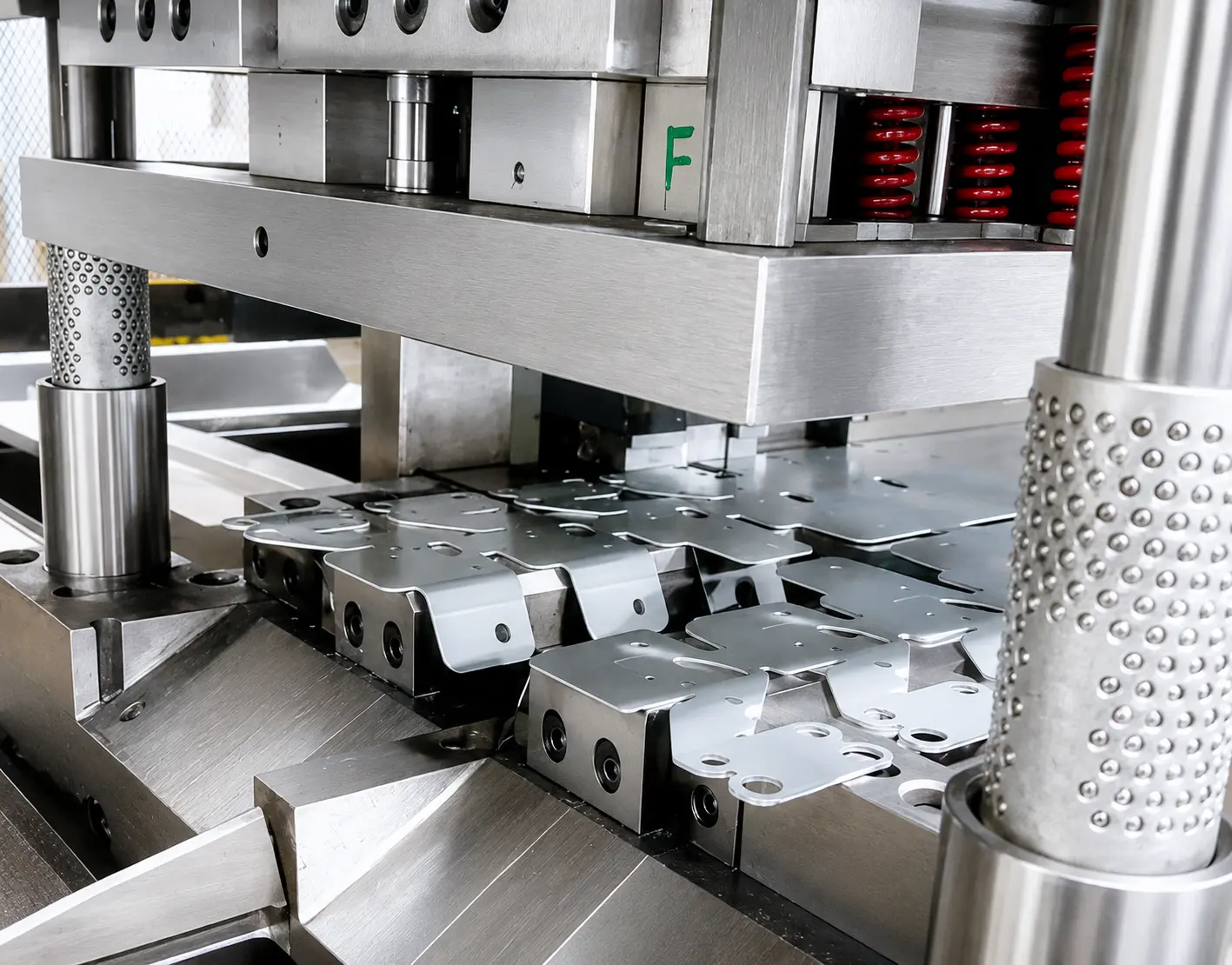
Forming turns a flat blank into a three-dimensional part, and no material is taken away in the process. The sheet is simply pressed against a die until it holds a new angle. This is where a flat outline starts to look like the finished item, as each bend adds height, a flange, or a face.
CNC Sheet Metal Bending on Press Brakes
Bending and forming uses press brakes, folding machines, and stamping units. Dechen runs fully automated CNC panel bending. It repeats the same angle across a whole batch.
CNC sheet metal bending also fixes the bend order. Flanges added in the wrong order can block the tool from the next line.
Forming Beyond a Simple Bend
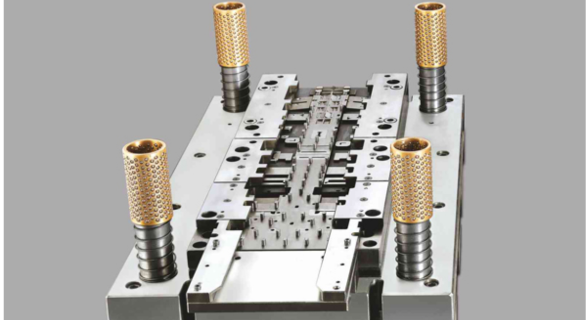
A press brake makes angles, not depth. Deep drawing pulls flat stock into a hollow shape, and these deep drawn parts can take the form of a cup or a shell. Stamping presses a form in one stroke. It suits higher volumes once the tool exists. Both run in the same plant.
How Are Separate Pieces Joined Into One Assembly?
Joining fixes two or more formed pieces into one unit. It uses heat, fasteners, or adhesive. Most projects need it, since an enclosure is rarely one folded piece.
Which Welding Method Suits the Metal?
Dechen performs CO2 welding, spot welding, and argon welding. The pick depends on the metal and the design specifications. MIG, TIG, and spot welding are also listed among the joining methods offered.
One rule guides all of it. With tight tolerances and thin-wall products, welding heat has a direct effect on metal quality. So heat should be kept as low as possible.
When Are Laser Welding Services the Better Choice?
Laser welding is a precise, high-strength way to join metal. It suits small, detailed parts held to tight tolerances. The heat stays on the weld line. That gives a minimal heat-affected zone (HAZ), the band of metal beside a weld that changes under heat. Less distortion means the metal around the joint keeps its properties.
Laser welding services also run as a non-contact process. That lowers the risk of contamination and tool wear. The method suits titanium, stainless steel, aluminum, and nickel alloys.
Rivets, Hardware, and Adhesive
Rivets hold two or more pieces together. They come in steel, stainless steel, and aluminum. Three basic types are used: solid, semi-tubular, and blind.
Riveting has two clear gains over welding. It can join unlike materials. It can also reach spots other processes cannot get to. Assembly work also covers hardware insertion and adhesive application.
What Happens During Finishing?
Finishing puts a surface treatment on the metal. It comes after forming and joining. Powder coating, plating, or anodizing is applied at this point.
Dechen also handles assembly and packaging, so parts arrive closer to ready-to-use. The list covers machining, pad printing, silk screening, fastener insertion, rounding of edges, tumbling and finishing, countersinking, and riveting.
How Tight Should Tolerances Be in Precision Sheet Metal Fabrication?
Many things affect sheet metal tolerance. Knowing the working limits is key to a sound prototype.
Tolerance should not be tighter than the part needs to work. Tight tolerance raises manufacturing cost by a lot. Practical figures shift with the design.
±0.010″ should be treated as the minimum. Linear tolerances should stay as loose as possible. ±0.020″ is the general recommendation. Tighter figures belong only where a functional area needs them. Precision sheet metal fabrication puts accuracy where it earns its cost.
Which Metals Suit Custom Sheet Metal Parts?
Sheet metal materials come from a wide range of metals and alloys. Dechen offers fabrication across the options below for custom sheet metal parts.
| Group | Metals Offered |
| Aluminum family | Aluminum, aluminized metal |
| Steels | Carbon steel, cold-rolled steel, high-strength steel, hot-rolled steel |
| Coated steels | Galvanized steel, Galvalume |
| Corrosion-resistant | Stainless steel, titanium |
| Conductive | Copper |
The choice usually comes down to three pulls. Rust resistance, strength, and weight. A gain on one often costs something on another.
Does Volume Change the Approach?
Volume changes the tooling, not the four stages. Prototype sheet metal fabrication runs from one-off samples through small batches. Production work covers low to high volumes.
Dechen turns parts and assemblies around as fast as 5 to 10 days. Past work includes body panels, chassis, enclosures, office and kitchen equipment, cases, and brackets. Prototype sheet metal fabrication feeds straight into that line.
What Should Buyers Check Before Sending a Drawing?
Four checks stop most quoting delays.
- Mark functional areas on their own. Tightening every dimension adds cost with no gain.
- Name the exact metal. “Steel” and “cold-rolled steel” quote differently.
- Say where welding heat is not allowed. This settles the joining method early.
- Send editable geometry. A 2D drawing or 3D CAD model in .STEP, .IGS, or .DWG removes guesswork.
What Does Dechen Bring to a CNC Sheet Metal Fabrication Project?
Dechen runs a plant of over 10,000 square meters. It holds more than 80 sets of high-end precision production equipment. The company combines R&D, production, and sales.
Quality control runs as a full-process system. It covers incoming material inspection, production processing, in-process patrol inspection, and finished product delivery.
A dedicated QC team checks dimensions, tolerances, appearance, and performance.
CNC sheet metal fabrication sits beside precision metal stamping and sheet metal prototyping and engineering services under one roof.
Frequently Asked Questions
What are the four main stages of sheet metal fabrication?
The four main stages are cutting, bending and forming, assembly, and finishing. Each stage feeds the next, starting from a flat blank.
- Cutting sets the outline by laser, punching, or waterjet.
- Assembly joins pieces by welding, riveting, or hardware insertion.
How tight can sheet metal tolerances go?
Sheet metal tolerance should be treated as ±0.010″ at minimum. ±0.020″ is the general recommendation for linear areas.
- Tight tolerance raises manufacturing cost by a lot.
- Punching accuracy at Dechen reaches up to ±0.001″.
When is riveting used instead of welding?
Riveting is used when the joint holds unlike materials, or sits where other processes cannot reach. Welding suits joints in matched metals.
- Rivets come as solid, semi-tubular, and blind types.
- Rivet material options include steel, stainless steel, and aluminum.
How fast can sheet metal parts be delivered?
Sheet metal parts and assemblies can be turned around as fast as 5 to 10 days. Timing shifts with the finishing steps and the order size.
- Prototypes and small batches move fastest.
- Coating and plating add time after forming.
Why does welding heat matter on thin parts?
Welding heat has a direct effect on metal quality on thin-wall products. Heat should be kept as low as possible.
- Laser welding limits the heat-affected zone and cuts distortion.
- Spot welding suits sheets joined at set points only.
What files are needed for a quote?
A quote needs a 2D drawing or a 3D CAD model in .STEP, .IGS, or .DWG format. Engineering then reviews specifications, material needs, and tolerances.
- A detailed, binding quotation comes back within 24 hours.
- NDA confidentiality is available on request.
Conclusion
The four stages only look separate on paper. The blank decides the bend. The bend decides the fit. The joining method decides whether a thin panel stays flat. Good sheet metal fabrication services manage all four as one chain.
Dechen Metal Machining fits for one clear reason. Cutting, bending, welding, finishing, and checks all run inside one plant. So a tolerance question goes to the people who will hold it. Request a quote with a 2D drawing or 3D CAD model, and your specifications, materials, and tolerances will receive a full review.